Showing posts with label book marketing. Show all posts

Thursday, September 21, 2017

Freebies -- Yes or No?

My pal, Martin Cavannagh of Reedsy, has sent me a link to a whole raft of book marketing "opportunities," all of which feature only free and/or deeply discounted books.
...BookBub and Bargainbooksy as well as some lesser known ones that we've done our best to vet. https://blog.reedsy.com/book-promotion-services/ You can sort by genre and advertising cost — and we've even allocated them into tiers based on their reputation: from tier one, meaning that they come highly recommended; to tier four, which probably won't do much for you (but at least they're free).
Yeah, well, I pass the link along, in case any of you want to discount and advertise your books. Or in case any of you want to score some free or deeply discounted books. Me, I subscribe to the Ruth Brown school of sales.
I might just possibly consider doing a freebie or discount on the first volume of my SAGE trilogy, or on the short story collection set in that world. It seems that people who are several books along into a series would do well to try to entice readers into that ongoing set of characters/adventures. Almost all of my books, so far, are stand-alones, though.

What do you think?

Marian Allen, Author Lady 
Fantasies, mysteries, comedies, recipes

Sunday, May 22, 2016

Learning From the Best

I admit it. I’m slow to take good advice. For instance, writing colleagues often recommend great how-to books, yet it takes me ages to get around to reading them.

Several people have recommended books by Donald Maass over the years, so I finally took the plunge and read TheBreakout Novelist while preparing notes for an urban fantasy I’m working on. Honestly, the book was so inspiring that I found myself writing copious notes about my own novel regarding plot points, ramping up the tension, creating big moments, and so on. It’s been invaluable.

On the other side of coin, I’ve been reading a fair bit of advice on marketing books. As mentioned last week, I will be doing more self-publishing over the coming months, so I’ve been looking for tips from those who’ve done it successfully.

There are a number of great blogs on the topic, but the advice I want to focus on today is from Toby Neal, whose name I’ve heard everywhere. Her advice not only makes sense, but seems relatively easy to follow, and I recommend that self-publishers read what she has to say.

A lot of her tips, such as building a fan base, gathering reviews, offering giveaways or sales, and maintaining a strong platform isn’t new, but Neal discusses something I’ve been pondering for a while, which is whether to place one’s books with Kindle Unlimited or choose multiple platforms.

She discusses her own experiences and the benefits of both, and she’s a fan of Draft 2 Digital, the company I plan to use when I release my books.

I may be slow to follow advice, but I’m also discerning about the advice I take. It’s important to figure out what works best for me. I have my own ideas about where I’ll publish my books and when, but it’s all part of the learning curve, right? We each have to follow our own path and, if we’re very lucky, we’ll be so successful that we’ll be creating trends rather than following them. 


Thursday, April 21, 2016

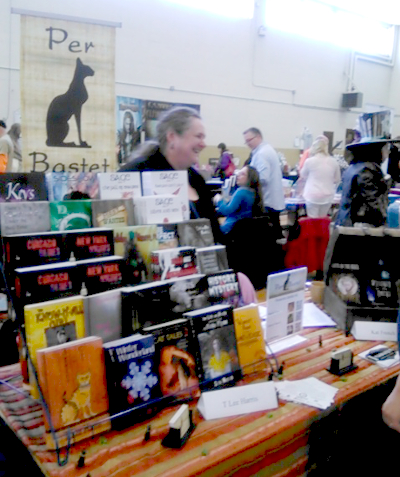
How Not To Sell Books At An Event -- reblogged from Marian Allen, Author Lady

So let's pretend you've written a book and had it published, and a bad man in a mask holds a gun on you and forces you to go to a book-selling event and take your books out of the box, but you don't want to sell any books. Here's how to almost guarantee you won't sell any:
  1. Put one copy of your book flat on the table. Do NOT put your book on a book stand or a rack or (assuming you fooled the bad man and didn't bring your display materials) don't prop one copy up against a stack of other copies. If people can't see the cover, they won't be tempted over to your table.
  2. Remain seated at all times. Do NOT stand up when you see people approach.
  3. Do NOT make eye contact. Do NOT smile.
  4. Never engage or attempt to engage people in conversation, not about your book, not about them.
  5. Never ask people what they like to read. If they reply that they like to read something you don't write but somebody else in the room does, don't point them to your fellow vendor. That might make the other vendor likely to point other people to YOU, and it might make your non-customer think I don't like this stuff, but I know somebody who does, and this writer is so darned nice, I think I'll buy this for my friend.
  6. Don't bring and display bookmarks or business cards so people who don't want to buy at the event can find your stuff later.
  7. Don't bring a tablecloth with you; make your table as dull and unattractive as possible.
  8. Never bring a partner so there's always somebody at the table. People can't buy books if there's nobody there to buy them from.
  9. Give no thought to what your book is about. Don't come up with a one- or two-sentence tagline, a ten-second elevator pitch, or a slightly longer synopsis. If somebody asks you what you write, you want to say something like, "Oh, you know. Stuff." Don't be tempted to ask somebody who has read and loved your book to help you with these pitches.
  10. Complain out loud about all the drawbacks of the venue, the organizer, and the attendees. Continue to complain after the event is over, but offer no feedback to the organizer privately or in the appropriate forum. That way, you won't be invited back to that venue, even if you bring your bad man with a gun with you.
Well, there's a start on what NOT to do if you want to sell books. Like, don't do this:
Author T Lee Harris.
T. Lee Harris writes -- and sells -- books.
Marian Allen, Author Lady
Fantasies, mysteries, comedies, recipes

Sunday, March 27, 2016

What I Want to Tell You

I read a great blog this week by author Janette Rallison called “Ten Things Published Authors Won’t Tell You”, which you can find here. I loved this blog because I found myself smiling and nodding at every point she made.

There are five points I want to add because I often come across new authors who don’t understand the business side of writing. And let’s be clear, the minute you publish your first book, whether traditionally or self-published, you are now in business. To give your business a chance at succeeding, you’ll need to market and promote the book with as much energy, integrity, and resourcefulness as you can muster. I appreciate that many of us are introverts and that forcing us to market our work may feel like entering a marriage you’re not quite sure about. But you’re in it now, and you either work at it or walk away.

As a self-published and traditionally published author, here are five things that this author has experienced:

·         Some of your marketing efforts will take a mountain of effort for very little return. You have to decide if the exposure and simply networking to get your name out there is worth the effort. You may spend hours arranging book signings, commuting, and then sitting in the stores for two to four hours at a time. The return on investment (number of books you sell) may not cover the price of gas. You may well spend 20 hours or more preparing the best talk of your life but it won’t necessarily translate into sales either, which leads to my second point.

·         Many authors sell only one or two books at events. It’s happened to me more than once, in good traffic areas and at well promoted events. The number of books sold at signings, conferences, and elsewhere is a crapshoot, unless you’re already famous or notorious or astonishingly attractive. Yes, we live in a shallow society.

·         If traditionally published, you will likely be arranging 99% of your own promotion and if it involves travel, you will also likely be paying for that too.

·         If you write a series and you’re not yet famous or garnering dozens of great reviews in well-known publications, your second, third, and forth books will probably not sell as well as your first. Mystery fans especially like to start at the beginning of a series. Even if they really liked the first book, as has been said to me, they won't necessarily spend money on subsequent books when there are so many authors to try.

·         There will be setbacks, deep disappointment over meager royalties, and probable re-evaluation about your entire writing career. If you’re really lucky, growth and change will come from it. Embrace this. Writing is a journey, and as Rallison mentions in her tenth point, despite the downside, we love writing anyway.


Thursday, October 24, 2013

10 Mistakes Authors Make That Can Cost Them a Fortune (and how to avoid them)

Book marketing expert, Penny Sansevieri, shares 10 tips for success:

When it comes to books, promotion, and book production I know that it can sometimes feel like a minefield of choices. And while I can’t address each of these in detail, there are a number of areas that are keenly tied to a book’s success (or lack thereof). Here are ten for you to consider:

1) Not Understanding the Importance of a Book Cover

I always find it interesting that authors will sometimes spend years writing their books and then leave the cover design to someone who either isn't a designer, or doesn't have a working knowledge of book design or the publishing industry. Or,
worse, they create a design without having done the proper market research.

Consider these facts for a minute: shoppers in a bookstore spend an average of 8 seconds looking at the front cover of a book and 15 seconds looking at the back before deciding whether to buy it. Further, a survey of booksellers showed that 75% of them found the book cover to be the most important element of the book. Also, sales teams at book distribution often only take the book cover with them when they shop titles into stores. And finally, please don’t attempt to design your own book cover. Much like cutting your own hair this is never a good idea.

2) Sometimes You Get What You Pay For

There’s an old saying that goes: You can find a cheap lawyer and a good lawyer, but you can’t find a good lawyer who is cheap. Though this is a very different market, it’s kind of the same thing.

Yes, there are deals out there and that’s not to say that you have to pay a good publicity person tens of thousands of dollars, but if you find someone who’s willing to market you for $200 or something like that, I’d be asking questions about what you get for your money because while $200 dollars isn't much, it’s $200 here and $99 there and eventually, it all adds up. So if a deal seems too good to be true, make sure that you’re getting all the facts. Just because they aren't charging you a lot doesn't mean they shouldn't put it in writing. And by in writing I mean you should get a detailed list of deliverables. Finding a deal isn't a bad thing, but if you’re not careful it might just be a waste of money so ask good questions before you buy.

3) Listening to People Who Aren't Experts

When you ask someone’s opinion about your book, direction, or topic, make sure they are either working in your industry or know your consumer. If, for example, you have written a young adult (YA) book, don’t give it to your co-workers to read and get feedback (yes, I know some YA books have adult market crossover appeal but this is different). If you've written a book for teens, then give it to teens to read. Same is true for self-help, diet, romance. Align yourself with your market. You want the book to be right for the reader, in the end that’s all that matters.

4) Hope is not a Marketing Plan

I love hope. Hope is a wonderful thing, but one thing it isn't is a marketing plan. Hoping that something will happen is one thing, but leaving your marketing to “fate” is quite another. Even though you wrote the book, even though you toiled hours making it perfect and even though you feel that you have enough people you know who will buy it and/or recommend it to friends, you still have to market it.

More often than not authors tell me that they can’t seem to get family or friends to buy their book. I know that sounds odd but it’s true and even if they do, that’s what? One hundred copies at the most? While family and friends do want to help, you shouldn't bank on them for success. So when it comes time to get your book out there, you need to have a solid plan in place or at the very least a set of actions you feel comfortable working on. Waiting on a miracle, a sale, or a sign from above will cost you a lot in terms of book aging. Once your book is past a certain “age” it gets harder and harder to get it reviewed so don’t sit idly by and hope for something to happen. Make it happen. A book is not the field of dreams, just because you wrote it doesn't mean readers will beat a path to your door.

5) Work it, or Not

There’s a real fallacy that exists in publishing and it’s this: “instant bestseller.” Anyone who has spent any amount of time in the industry knows there is no such thing as “instant” and certainly the words “overnight success” are generally not reserved for books. There is also the belief that a “miracle” will just happen to you when you publish. Personally I love miracles but they tend to not happen with books, sadly. Book promotion should be viewed as a long runway. Meaning that you should plan for the long term. Don’t spend all your marketing dollars in the first few months of a campaign, make sure you have enough money or personal momentum to keep it going.

Whether or not you hire a firm you must “work it” – meaning working your marketing plan, working your goals, whatever. Publishing is a business. You’d never open up a store and then just sit around hoping people show up to buy your stuff. You advertise, you run specials, you pitch yourself to local media. You work it. But what does “working it” mean? Well, it means that if you have a full-time job you find time each week to push the book in some form or fashion. You find time, you make time. You should be engaged in your own success, even if you hire someone to do this for you, you should still be involved. Sometimes it doesn't take much, but it does take a consistent effort, whatever that is. I have a friend who is losing weight. She’s lost 19 pounds over three months. Maybe that seems like pretty slow weight loss, right? I mean who wants to wait three months for a measly 19 pounds? Still, she’s ahead, she’s doing little things that make a big difference. Time will pass anyway. How will you use it?

6) Not Understanding Timing

While timing in publishing has essentially become obsolete, things like advanced reviews, advanced pitching and early sales into bookstores aren't the be-all-end-all they once were. Still, timing is important. While it’s true that sometimes older books can see a surge of success it’s not the rule. You’ll want to be prepared with your marketing early. In fact, you should have a plan in place months before the book is out. That doesn't mean that you’re sending 200 review copies out, that just means you have your ducks in a row so to speak and you know what your plan will be.

Also, timing can affect things like book events (especially if you’re trying to get into bookstores). Understand when you should pitch your book for review, start to get to know your market and the bloggers you plan to pitch. Create a list and keep close track of who to contact and when you need to get your review pitch out there. Though many things have changed in regards to timing, it doesn't mean you shouldn't plan. I recommend that you sit down with someone who can help you strategize timing so you can plan appropriately for your book launch. A missed date is akin to a missed opportunity.

7) Hiring People Who Aren't in the Book Industry

Let’s face it, even to those of us who have been in this industry for a while it still doesn't always make sense. Hiring someone who has no book or publishing experience isn't just a mistake, it could be a costly error. With some vendors like web designers you can get away with that. But someone who has only designed business cards can’t, for example, design a book cover. Make sure you hire the right specialist for the right project. Also, you've likely spent years putting together this project, make sure you make choices based on what’s right and not what’s cheapest. If you shop right you can often find vendors who are perfect for your project and who fit your budget.

8) Designing Your Own Website

You should never cut your own hair or design your own site. Period. End of story. But ok, let me elaborate. Let’s say you designed your own site which saved you a few thousand dollars paying a web designer. Now you’re off promoting your book and suddenly you’re getting a gazillion hits to your site. The problem is the site is not converting these visitors into a sale. How much money did you lose by punting the web designer and doing it yourself? Hard to know. Scary, isn't it?

9) Becoming a Media Diva

Let’s face it, you need the media more than they need you. I know. Ouch. But it’s the unfortunate truth. So here’s the thing: be grateful. Thank the interviewer, send a follow up thank-you note after the interview. Don’t expect the interviewer to read your book and don’t get upset if they get some facts wrong. Just gently, but professionally, correct them in such a way that they don’t look bad or stupid. Never ask for an interview to be redone. Most media people don’t have the time. I mention this because it actually happened to a producer friend of mine who did an interview with a guy and he decided he didn't like it and wanted a second shot. Not gonna happen. The thing is, until you get a dressing room with specially designed purple M&M’s, don’t even think about becoming a diva. The best thing you can do is create relationships. Show up on time, show up prepared, and always, always, always be grateful.

10)  Take Advantage

In this instance, I mean take advantage in the best possible way. There are a ton of resources out there for you. Seriously. Compared to when I was first in business almost 13 years ago the resources and free promotional tools that are out there now are almost mind-numbing, and the fact that so many authors don’t take advantage of them is even crazier.

Things like social media - I know it’s a time suck but you would be amazed at how many authors rock out their campaign by just being on Facebook, or Wattpad or even Goodreads. When I wrote a Goodreads article a while back I got some interesting feedback from people who said that there was a lot of negativity on there. Well, that may be so but I've never seen it and if I do, I ignore it. Point being, the stuff is out there. Find out for yourself what works and what doesn't. Yes it’s fine to take advice from other authors but you should still experience this for yourself before you decide if it’s right for you or not.

When it comes to marketing, the mistakes can cost you more than anything both in time and money. Knowing what to do to market your book is important, but knowing what to avoid may be equally as significant.
* * *

Reprinted from "The Book Marketing Expert newsletter," a free ezine offering book promotion and publicity tips and techniques. http://www.amarketingexpert.com

Friday, May 11, 2012

New Release: How I Made Over $42,000 Selling My Kindle eBooks

In March 2012 one Canadian author boldly went where few have gone before—into the land of making real money with Amazon's KDP Select program.

This is her story…

My name is Cheryl Kaye Tardif and I am an international bestselling suspense author who earned over $42,000 dollars in March 2012 selling ebooks via Amazon's KDP Select program, captured the interest of a major literary agency, and went on to sign with a foreign rights agent. And I'm about to tell you HOW I did all that.

I don't normally tell people how much money I make, but I believe writers need to know it IS possible to earn a real income from your books. Seriously, if I can do it, anyone can—if you have the right combination of criteria and techniques.

In this book, I'll share with you what I believe are four key elements you must have in place to see high sales. And I'll reveal the strategic techniques I used during my KDP Select promotions that resulted in earning over $42,000—with $32,000 of that from ONE title alone.

Not only did I earn over $42,000 in ebook sales, I was contacted by one of the leading literary agencies in New York. The chairman noticed my success when my one title made #4 in the Top 100 Bestselling Kindle ebooks, right under The Hunger Games trilogy. Since then, I've signed with another agent for foreign rights.

So, if you're ready to earn some real money with Select, let's begin…

Available at Amazon (Kindle) for only $2.99.

Saturday, August 20, 2011

How to be a Tease

Last weekend, I explained how writers need to learn to become a tease and tease readers with bits of information BEFORE their book is released. Creating buzz is important to your success. This weekend, I'm giving you some ideas on how to be a tease.


1. When you sign a book contract or when you decide to self-publish a book, make a small announcement that you have a book deal or that you will be publishing a new work within the year.
2. If working with a publishing company, blog about the process, but don't go into too much detail on the specifics. Always keep in mind that you really want to talk to your target audience, your readers. Give them only enough info about the process that you think they can identify with. Help them identify with the process by comparing it to a more mainstream type of career.
3. When your publisher has shown you the cover, blog about seeing it, but don't describe it. Mention that you'll post it as soon as you can, once your publisher has given you permission to do so. Use the same technique, though obviously different wording, if you're self-publishing.
4. When you see the back cover text, blog about seeing it. Let people know how awesome it is. Again, tease them and let them know you'll post it ASAP.
5. When you are about 2-3 weeks to publishing, post the back cover text. Later, post review blurbs. Post them one at a time. Ask your readers for feedback. What do they think about the description?
6. About 1-2 weeks before, mention that you'll be posting the cover soon and that they should check back. Again, tease them.
7. Post the cover. Make it large. Ask readers what they think? What do they like best about your cover?
8. On release day, let everyone know your book/ebook is available and give them a live link so they can easily click on it and buy it. Always make it easy for your readers to find information on your book and give links to major retailers so they know exactly how to buy a copy.

The above list will always be subject to what your publisher wants you to do. When unsure, always ask. Never post something they send you without clearing it with them first. Often you'll see early drafts of a front cover, or a rough draft of back cover text. Your publisher may also want you to do things a bit differently than the list above.

Becoming a tease is easy for some and more difficult for others. What may make it easier is to always ask: if I were the reader, what would I want? What would tease me? Putting yourself in their shoes is one of the best marketing practices you can learn. Learning to be a tease is another. And this kind of teasing doesn't require nimbleness. Or a pole.

There are other things you can do to tease: post a book trailer video, write a short post about one of your characters, or become a guest blogger/interviewee on someone else's blog.

What else can you do to tease a reader prior to publication?

Cheryl Kaye Tardif,
bestselling author of Children of the Fog

Sunday, August 14, 2011

Writers Must Learn to Be a Tease


A good writer knows that when writing any novel, they must tease the reader with bits of information, plant red herrings, leave cliff-hangers and dangle a trail of action and emotion to keep the reader in suspense, but what they may not know is that once the book is completed, the real teasing must begin―teasing readers.

Marketing a book is generally divided into two sections: pre-publication or pre-pub marketing and post-publication/post-pub marketing. If you promote your book by dumping all the information in a reader's lap at once, you probably won't see the best results. But if you slowly tease them, heighten their awareness of your book and your name, and build up the anticipation, you'll have readers throwing dollar bills at your new creation.

Like any budding relationship, it's all in the tease. Think of a great romance movie. The lovers didn't just dive into their romance. It built up over time. It started with a look, a laugh, a soft touch, the first date, the first kiss, the challenges they must overcome to be together, the longing for more until finally the couple has had enough of teasing. Why do people go to movies or read books? They love a good tease.

Many expert marketers use the term "create buzz". You want people talking and thinking about your upcoming release. You want them telling their friends so that those friends will tell two people, and so on and so on. You want them anxiously awaiting release day so that they buy your book right away. If they wait too long, something will come up to distract them. Creating buzz should be like a slow strip tease, only instead of stripping, you're adding layers and layers of anticipation.

Teasing effectively is a bit of an art, but it can be learned. Stop by The Write Type on Saturday for step-by-step instructions on 'How to Be a Tease'.

Cheryl Kaye Tardif,
bestselling author of Children of the Fog

Sunday, April 17, 2011

To Support or Not Support? A Thorny Question

Yesterday, I attended a well publicized literary festival in one of my local communities. This is an annual event run by an arts council and although the tables were nicely arranged and there were lots of great volunteers, there weren’t many more customers than there were displayers; however, this isn’t an unusual phenomenon at literary events. Unless organizers tie book events into larger events (fairs/festivals, etc.), or hold these events in high traffic areas, the customers won’t go out of their way to show up.

It’s interesting because this morning, I was on a forum where a writer was lamenting that the announcement of his new book—placed on several venues, and to family and friends—generated virtually no response. A couple of others writers commented that they’ve noticed a definite decrease in the amount of support and comments they’ve received on their blogs and for their books. Hmm. So, what’s going on? Well, I can only speak from personal experience.

When I started to build an internet presence about three years ago, it was great fun to meet other virtual friends, to “friend” all sorts of people on MySpace, etc., and to chat. A number of people proudly announced their books and asked for tags, votes in contests, reviews, and other forms of support. I tried to comply, but it soon became clear that the number of writers asking for support was multiplying faster than rabbits in spring.

Frankly, I was a bit taken aback that strangers were asking me for favors because I would never ask someone to vote for me for anything. Also, my review requests went directly to reviewers, not to forums at large, so to speak. I’ve also never put out a general requests for tags; if I tagged someone’s book, I didn’t ask to be tagged back, although I’m starting to now because tagging takes time. To this day, though, I don’t expect anything back from anyone. I make announcements, try to keep people informed about what I’m doing, and let it go at that. Some might call me a poor marketer, and maybe I am, but I have to do what feels right for me.

The thing is, I’ve drastically cut the number of votes I cast, tags I give, and comments of support because I’m overwhelmed by the sheer numbers of people asking. It’s like an electronic tsunami that threatens to drown me if I don’t pull back and limit by internet time. Much of the week, I have to skim the many forum posts I receive daily, and I’ve already left a few groups.

The bottom line is that we all do what we can, but there are so many writers and so many requests that it’s becoming more difficult to offer the level of support that colleagues wish for. It’s like yesterday’s literary event: too many sellers, not enough buyers, and a little less support every year, for plenty of good reasons. But you know, hasn’t it always been this way, to some degree, for writers?

THE OPPOSITE OF DARK, http://bit.ly/i983XE, book trailer http://youtu.be/ojgoDKSW_ck FATAL ENCRYPTION, http://tinyurl.com/ddzsxl TAXED TO DEATH, http://tinyurl.com/czsy5n

Sunday, March 06, 2011

Finding a Balance Between Writing and Marketing

Fauzia Burke wrote a terrific article in The Huffington Post about the six essential elements for successful book marketing. In a nutshell these are:

. website
. e-newsletter
. blog
. Facebook
. video
. Twitter

She talks about why each of these elements is important, and especially notes that using all six is the best marketing strategy to promote your books. Burke also states, however, that these things take time and attention. In my opinion, that’s where most of us fall down, not intentionally, but due to real life/family/day job circumstances.

When I was working a day job, all of my free time was spent writing and catching up on household chores. Although I knew the importance of promotion, the idea of putting in time each day to promote was laughable. This became a worrisome obstacle, however, and I eventually concluded that the only way I could add regular promotion to my week’s long to-do list—and write a little more—was to cut back my working hours.

Now that I’ve been writing full time for six months, my creative output has improved as has my promotion to some degree, but it still needs work. I have to confess that I only do two out of the six steps, blogging and Twitter, with any regularity. I have a Facebook page, though I don’t visit it daily, which I should. My website is a work in progress at the moment, but once it’s updated, it will also be a useful tool. My publisher is working on a book trailer for The Opposite of Dark, so the video aspect is covered. Funnily enough, a colleague recently mentioned that since I’m writing a mystery series, a newsletter might be a good idea, so I’m thinking about that too.

I’ve been writing a long time, but—introverted wallflower that I am-- it’s only in the last year or two that I’ve come to fully accept the importance of marketing oneself. Happily, all of the steps Burke listed can be done from home but, even as a full time writer, the question still remains, how much time should I spend on marketing versus writing, especially when putting out a book a year? I'm one of those who can only produce polished work after multiple drafts, and each one takes time. It’s a question I don’t have a clear answer for yet. Maybe I will in another year.

You can find Burke’s article at http://tinyurl.com/47of2fy

THE OPPOSITE OF DARK, http://bit.ly/i983XE
FATAL ENCRYPTION, http://tinyurl.com/ddzsxl
TAXED TO DEATH, http://tinyurl.com/czsy5n

Saturday, August 28, 2010

Sell Your Book, Not Your Soul: A Workshop by Marty Chan


The Canadian Authors Association - Alberta Branch and Get Publishing Communications Society present...

Sell Your Book, Not Your Soul
A Workshop by Marty Chan
9 A.M. – 1 P.M.
Saturday, September 11

Campus Saint-Jean
8406 Marie-Anne-Gaboury Street (91st Street)
Lacerte Pavillion (3rd floor)
Edmonton, Alberta

Marketing a book doesn’t have to make writers feel like taking a shower. Playwright/author Marty Chan shares his tips and tricks on how to sell your book without selling your soul. Through humorous anecdotes, he’ll highlight his successes and failures to illustrate the dos and don’ts of book marketing campaigns and how to approach self-promotion in a positive and productive way. Participants should be prepared for group work.

Bio
Marty Chan is a cross-genre writer with successes in theatre, television, radio and kids’ fiction. He’s best known for his cross-cultural hit, Mom, Dad, I’m Living with a White Girl. Edmonton audiences may know of his work from CBC Radio, the Edmonton Journal or the Fringe Festival. Currently, he has been entertaining kids across Canada with his hilarious mystery novels and picture book. He works and lives in Edmonton with his wife and their two cats. For more information about Marty, please visit martychan.com.


Monday, July 12, 2010

Guest Post: Ten Things You Can Do Now to Promote the Novel You Haven’t Even Sold Yet

Today's guest blogger is Gina Holmes, author of the novel Crossing Oceans, and she's sharing some valuable tips. Here are Ten Things You Can Do Now to Promote the Novel You Haven’t Even Sold Yet:

  1. Buy your website URL and begin to build it. You can go very expensive and pay thousands for a professional site, or you could start small and do something like godaddy, where you build your own site. I took a third route and hired someone to make me a template and then set it up like a blog, so that I could tweak and update it easily.
  1. Get professional headshots. I hired a friend whose work I admired but who is still considered an amateur. For fifty dollars and my husband agreeing to baby-sit for an afternoon, I got a few really great and professional looking pictures. Don’t let anyone convince you that a good headshot is a waste of money for a novelist. On Novel Journey we post lots of author photos, many of which look like candid shots that other people are cut out of. Remember how important perception is. I look at a substandard picture and I subconsciously think this author is no perfectionist, and am less likely to want to read their work. Spend the money and get a good promo picture of yourself.
  1. Keep a file filled with the names of magazines you come across that fit your writing. For example, if you write Victorian era historicals, Victorian magazines might later be interested in an article written by you. Jot down the names of them and any other publications you come across that might be a fit. This will save you a lot of research time later on.
  1. Keep a folder of book reviewers you’ve come across that seem to enjoy the type of  stories you write. I send myself emails with the reviewer’s name, books they’ve reviewed and liked, their email address and, if I know them, how I know them. While it’s true that they might not still be reviewing when your book finally releases, it won’t hurt to try. 
  1. Start reading marketing/publicity books now and take notes. My personal favorite is the simply titled Publicize Your Book. If you can only afford one book on marketing/publicity, I highly recommend you make it that one.
  1. Read The Tipping Point. It will explain some very important concepts on what makes things popular. It’s an easy and surprisingly entertaining read.
  1. Read How to Make Friends and Influence People. The book has been around forever for good reason.
  1. Keep a list of natural influencers. You’ll call upon these folks later for help in getting the word out about your book.
  1. Help anyone you can. For one, it’s just the right thing to do, for two, what goes around comes around.
  1. Start building your platform now. Write articles, create a blog with excellent and frequently updated content, volunteer to teach classes on what you’re an expert in, or for whatever committees in ACFW, or other writing organizations you belong. People are much more likely to be interested in your book if they feel like they know you and you’ve shown interest in them.
About Gina: In 1998, Gina Holmes began her career penning articles and short stories. In 2005 she founded the influential literary blog, Novel Journey. She holds degrees in science and nursing and currently resides with her husband and children in Southern Virginia. Her debut novel, Crossing Oceans released April/May 2010 with Tyndale House Publishers.


Friday, June 04, 2010

Cheryl visits Polished Publishing Group blog and gives her Recipe for a Bestselling Novel

Two nights ago Kim Staflund, a publisher I've recently connected with, asked me if I'd like to write a guest post for their blog. Of course I said yes. I love writing, and even more I love a good writing challenge.

The topic she wanted me to blog about was on becoming a bestselling author. She gave me a good week to complete it. I was finished that evening. :-)

I invite you to check out my post on the PPG blog, and please leave a comment for us if you find it helpful. Now, get your mixing bowl ready...
Recipe for a Bestselling Novel

~Cheryl Kaye Tardif
http://www.cherylktardif.com/

Sunday, May 09, 2010

Over One Million Books Published in 2009

I subscribe, free of charge, to John Kremer’s weekly newsletter which offers great marketing tips, useful facts, and other things related to the world of book marketing. If you’re a writer with a published book and you’re not familiar with Kremer, his is a good name to know. He’s the author of 1001 Ways to Market Your Book, now in its six edition. I have a copy of an earlier edition and it’s an excellent resource for both fiction and nonfiction writers.

In his April 19th newsletter, Kremer wrote that after compiling information from its Books in Print database, Bowker states that 288,355 books were published by traditional publishers in 2009, but a whopping 764,448 titles were published by print-on-demand services. That’s over one million titles released last year!

Traditional publishers published 45,000 novels, 32,300 children’s books, 19,300 religious titles, 15,400 science titles, and 26,000 economic titles. Also, three companies, BiblioBazaar, Books LLC, and Kessinger Publishing reprinted almost 700,000 titles which means authors are not only competing with new titles, but nearly another million re-released books. I’m beginning to think it’s a small miracle that anyone sells anything.

Kremer went on to add that the main POD publishers were CreateSpace with 21,819 titles, Lulu.com with 10,386 titles, Xlibris with 10,161, AuthorHouse with 9,445 titles and PublishAmerica with 5,689 titles.

Since these are print titles, that’s an awful lot of paper, don’t you think? If you’re interested in Kremer’s newsletter, visit his website to find other good stuff at http://www.bookmarket.com/

As always, my amateur sleuth, Vancouver-based, Alex Bellamy mysteries can be found at:
FATAL ENCRYPTION,http://tinyurl.com/ddzsxl
TAXED TO DEATH,http://tinyurl.com/czsy5n

Thursday, October 29, 2009

The business side of being a writer


Some people might not view an author as a business person, but I have to tell you, there's far more to being a writer than cloistering oneself in a small room for months and typing out 80,000 words. In today's world, a successful writer must also take on the hats of publicist, marketer, event planner, advertising rep, accountant, stocker (not stalker) and more.

As a successful Edmonton author, I am right at home with the writing and marketing part. I even make a decent publicist and have done this for other writers. It's the accounting part I suck at. And the stocking of shelves.

I'd love to discuss this here with other writers. How do you manage the number side of writing? Do you hire someone else or just suck it up and do it? Are there other options you've discovered (other than having books published by a traditional publisher, which I've also had)?

For me writing is both an immense pleasure and a business. I can't really have one without the other--unless I want to be my only reader. With the economy being as it is and so many changes in the book industry, authors must take on more of the marketing role, no matter who publishes you.

Finally, a small bit of promo from the marketing side: I am one of only a handful of Canadians who are competing in a writing competition sponsored by Dorchester Publishing, a very respectable US publisher. I think I'm the only Edmonton contestant as well. I'd sincerely appreciate your support.

Please check out my debut romantic suspense Lancelot's Lady on Textnovel.com and click on the blue thumb and blue phone circles. This gives me 2 points in the contest. There are 3 days to go until the semi-finalists are selected. I really want to win this! The prize is a publishing contract with Dorchester.

http://textnovel.com/stories_list_detail.php?story_id=928

Sign up is fast and free and you'll have access to many novels and short stories you can read for free. Thank you, in advance, for your support of an Edmonton author.

Now I must go and procrastinate about doing my accounting. :-)

Cheryl Kaye Tardif
http://www.cherylktardif.com

Thursday, July 30, 2009

Will a publisher do the book marketing for me?

I often receive emails from aspiring authors who want to know if they can find a publisher who will do all their marketing (or most of it) for them. Sometimes the author isn't confident they can promote their book; sometimes it's a matter of the author having no money to invest in their marketing endeavors. Getting a book published is only half the battle, and authors need to recognize that and prepare for the other half--marketing their books.

In my experience, and from everything I've read and heard from publishers, agents and other authors, there is no such 'free' ride. Authors must be willing to promote their books if they want them to sell. Publishers nowadays only want to take a risk on new authors who are enthused about marketing their books. In fact, they often ask you upfront, before they sign you, what your marketing plans are. And you have to have some. It's that simple.

Most publishers do little marketing beyond their initial catalogues, industry notices, ads in magazines or newspapers--unless you're a big-name author. It's really up to authors to get the word out. Your publisher might print some promotional material for you--posters, bookmarks or business cards. Most authors pay for their own expenses during book tours, including travel, lodging and meals. The distributors have sales teams who go into bookstores to try to sell books to the store owner/manager. Sales teams often don't do much for authors who don't promote their books. Why should they when they have other authors out there busting their butts to sell books? :-)

An author in today's world--who wants to be successful and actually make some money back to pay for their marketing endeavors--must be proactive.

The five musts that every author should have:

  1. a professional author's site with domain name and no free hosting
  2. a blog that's updated at least once a week
  3. Facebook account and knowledge in how to use it properly
  4. MySpace account and knowledge in how to use it properly
  5. Twitter account and knowledge in how to use it properly
Those are the basics in today's marketing. Nothing is free. It takes hard, dedicated persistence to make a book successful. The meaning of success can vary from person to person. I look at success in two levels--basic level: lots of readers who love the book and enough sales to pay for the $5000+ it costs to market a book efficiently; and advanced level of success: major traditional publishing contracts, great distribution, and major bestselling status, which all equals money I could live on.

What I've described above is the real world of publishing. It's a tough industry to break into because the competition is HUGE! You're competing against billions of authors. If you want your book to sell and be successful, you have to be part of the marketing--a huge part.

~Cheryl Kaye Tardif,
bestselling author & book marketing coach
http://www.shamelessbookpromoter.com
http://www.cherylktardif.com

Friday, July 24, 2009

Top 10 Tips to Help Authors Successfully Promote Their Books

Most authors should know that it's really up to them to promote their books, not the publisher. The publisher will do what they can do, of course, but the author is the one who can really get the word out there to the masses. So here is my Top 10 list of things authors can do to successfully promote their own books.

  1. Promote your book BEFORE it's even published. Think of this like movie trailers. Film companies are super intelligent; they give people a sneak peek to get them interested, then hook them with anticipation by announcing a release date. Authors can do the same. Give your readers a sneak peek--a free sample, a book trailer. Then as soon as you know the release date (and about 1-3 months in advance) start promoting this new release.

  2. Have your book PROFESSIONALLY edited. If you want longevity as a writer, you must treat this like a career. This means that even self-published, author-originated works must be edited professionally by someone who knows HOW to edit. NEVER be the only editor for your book. If you put out an inferior product you will lose fans and sales, and bookstores will not promote you. If you're going to do this, do it right! You're competing with every other book out there, and there are millions, so find a good editor.

  3. Once your book is published, promote the heck out of it! Too many authors leave marketing up to their publisher. This is your baby, no one else's. As soon as your book is released, you have a window of about 3 months to get it off the ground, and another 3 months to keep things rolling. Not even a publisher can market your book as well as you can, and if you don't know how, LEARN. If you don't know where to start, I'm a book marketing coach; I can teach you.

  4. Create a solid internet identity. What will we find if we Google your name right now? Will we find someone else with the same name who sells lawn ornaments? Are there 10 hits? 1000? 100,000? Are the first 3 pages of any search engine all about you or at least 90% you? If not, you've got work to do. Make sure you have a professional looking website and blog. Don't use a free host with ads for your site. Invest in a domain name (your name preferably) and pay for hosting.

  5. Blog at least 2-3 times a week. On numerous blogs. Blogging about anything sells books. Readers like to see the human side of their favorite authors, so blogging should not be a hardcore sales pitch every post. Find a controversial or thematic angle within your book and blog about that. My novel Whale Song dealt with assisted suicide. I not only researched the topic, but I blogged about it and was then contacted by a radio station because of my blog post and then was interviewed. Blog about the journey you took to get where you are in your writing career. Blog about editing, rejections, writer's block, courses, anything that might be helpful to other writers.

  6. Hold a virtual book tour. VBTs are an excellent and inexpensive way to get the word out about your book. Other bloggers are now promoting YOU. There is, however, an effective way to do this and an ineffective way. Successful blog tours have the following main elements: thoughtful planning, research, themed articles/posts, calls to action, proper scheduling, advertising and high sales. Your book should reach the bestsellers lists on Amazon, at the very least.

  7. Sell your book on a specific day by holding a contest. If you ask people to order from one major retailer, like Amazon for instance, on a specific day and offer them some kind of incentive, you will have the opportunity to make Amazon's bestsellers list. Pick a day, offer a prize they can't turn down (remember: never make your book your prize-at least, not the book you are trying to promote) and have a proof of purchase to ensure sales are submitted on one day. Once you make Amazon's list (and don't forget, books are broken into categories), you're a "bestselling author" with a "bestselling novel". That statement alone attracts more success.

  8. Find out where your readers are. The goal is not to have your book in every bookstore. First, very few books achieve that. Second, having them in a store is no good if no one is buying them. So find out where your readers are. If you write mysteries, find out where mystery readers meet in your town. Become a guest author at a book club. Look for online reading groups or sites like GoodReads and start schmoozing with readers.

  9. Cultivate personal relationships with bookstore staff. Most authors underestimate the power of signing books in a store. Too many authors focus entirely on sales, or lack of sales. Forget sales! Think about relationships instead--with store staff, customers and potential fans. That is what is important. When you build these relationships you will have store staff who will hand sell your book and go out of their way to promote you, invite you to special events and feature you on special front-end shelves that publishers have to pay for. Customers can turn into media contacts and interviews. Potential fans can turn into lifelong fans who will buy everything you write and recommend you to their family and friends.

  10. Contact media for every event or set of events. If holding a bunch of signings during October, call it your "fall tour" and promote it. Send out press releases to local TV, radio, newspapers and magazines. Send out online releases to services like 24-7pressrelease and free online services. Just Google 'press distribution services'. Many authors consider interviews a form of success, and the more you create a need for your area of expertise (whether writing, getting published, or a particular theme from your book), the more media will want to interview you.

It takes a combined effort and partnership between author, publisher and retailers to make a book successful. A partnership. That's how you must think of it. So don't just throw your "baby" out in the world and expect someone else to baby sit it or expect it to fend for itself.

Take control and responsibility seriously. Being a writer is the emotional, creative side; being a successful author of a published book means you have to recognize the business side. It comes with the territory. Accept it. Embrace it. And be the most successful author you can be.

~Cheryl Kaye Tardif,
bestselling author and book marketing coach
http://www.cherylktardif.com/

Thursday, July 02, 2009

Author Cheryl Kaye Tardif interviews Vikram Narayan from BookBuzzr.com


Hello Vikram, and welcome to The Write Type ~ Multi-Author Musings. We are so happy to have you visit us. Since I’ve used BookBuzzr and fReado.com myself, I can say that you offer a terrific service for authors and their readers. And it’s free!

Can you tell us a bit about yourself? Are you a writer? Reader?


I’m a serial entrepreneur who’s obsessed about building the next big thing on the Internet. I earned an MS in Industrial Administration from Carnegie Mellon University some years ago. I’m also a keen martial artist and practitioner of Aikido. I’m an avid reader of books and listener of audio books. I do have a book inside me that is waiting to come out some day soon.

Where did the idea for BookBuzzr come from? Why did you decide to create it?

A few months ago, an author friend of mine – Chetan Dhruve – was describing the pain that authors face in marketing their books online. There are two problems with traditional author sites:

1. Most of the traffic goes to 'destination sites' such as Facebook, MySpace, Yahoo or the New York Times. So your author site may not receive the kind of traffic that you would want.
2. Even if a fan of your book comes to your site, it's not easy for her to easily share information about your book with her friends.

So how do you market your book in an era where the attention-spans of consumers measure a few micro-seconds? How do you tempt your potential readers to flip-through the pages of your book? How do you allow easy sharing of your book on networks such as Facebook, MySpace and other social networks?

So I asked him what would be a dream online marketing tool. Chetan, in a few moments of inspiration, described what he’d want and we sketched out the screens of the ultimate online book-marketing tool. I got the product developed in a few months using developer resources at another software business that I own.

What exactly is BookBuzzr and how does it work?

BookBuzzr is a free, online book-marketing technology that can be placed instead of your book-cover image on your author website, Facebook profile and blog. BookBuzzr is more than just a replacement for your book-cover image. It's a portable author website that allows your book information and extract to be shared on Facebook, Blogs, MySpace and more. So every time a fan of yours decides to post your book-widget on his or her blog, your entire information (including where to buy and buzz about your book) becomes available there. It’s like your business card on the Internet!

Apart from the easy share-ability, we've worked hard at making the pages of your book look and act like a real book. So when a reader clicks on the edge of the book, the page turns like a real book. Somehow, this seems to elicit a "wow!" from most people who try BookBuzzr.

fReado.com is the site which carries all the books that are available in BookBuzzr format.

Is it difficult for an author to set up a BookBuzzr widget?

Putting up your book into BookBuzzr format is quite simple. If you know how to share your videos and photos on Facebook or MySpace you know how to use BookBuzzr.

How many authors are using fReado?

We expect to have over a 1,500 authors & books on fReado by the end of this month.

Are there any recognizable names using BookBuzzr? Any “big” authors”?

We have quite a few big name authors using BookBuzzr. Chetan Dhruve whose inspired vision gave us the start for BookBuzzr is a pretty well-known name and his book has become an international sleeper-hit that’s been translated into 5 languages. Author Tony Eldridge whose book “The Samson Effect”, acquired by a Hollywood studio, is also using BookBuzzr.

Are publishers using your service to promote their authors’ books?

Yes. We’re making it easier for publishers to mass upload their books and author information with just a few clicks. We’ve got about 60 Publishers who have begun using fReado and BookBuzzr.

Can you give us an example of a BookBuzzr book widget?


Where do you see BookBuzzr in 3 years?

The other day, we got a testimonial from the author Lee Murphy and he said, “I think you have a terrific service and I know I have already sold one copy on Amazon as a direct result of it.”

So we know that we have a unique little book-marketing technology that every author needs. Our challenge is to let authors know about this free resource that can help every author in building and extending their platform. So in terms of where we see BookBuzzr in 3 years … we want to be the first place where every author goes when he or she begins to think about marketing books online. If every book-cover image on every author, publisher and book-seller’s website is replaced with the BookBuzzr book-widget, then I would say that most of our mission has been accomplished.

Towards this end, we’re making several improvements to BookBuzzr in the coming months to make it easier for fans to distribute a book-widget on their Facebook profiles, Twitter, blogs, social networks and cell-phones.

Thank you, Vikram!! I am sure that authors will be very excited about your service/product, especially after they've tried it once.

For more information on BookBuzzr and fReado, please check out http://www.bookbuzzr.com/ and http://www.freado.com/.

Thursday, June 25, 2009

20 Simple Ways to Drive Massive Traffic to Your Web Site

Embarking on an Internet marketing campaign doesn't have to be difficult, tricky, or complicated. Here are a few simple tips (twenty in fact) that you can easily implement to get tons of traffic to your site right now!

1) Write articles: believe it or not this is an incredible tool for driving traffic. Writing good, well-written, relevant articles can net you quite a bit of activity to your web site. Don't forget to add your URL in your byline. Articles should be 500 to 2,000 words in length. You can send articles to sites like: articlecity.com, goarticles.com, submityourarticles.com and ezinearticles.com.

2) Social bookmark *everything* - and I do mean everything, you can bookmark each page of your site and each blog entry you post. While this might seem tedious it's worth it. You'll see a strong increase in traffic if you social bookmark each page on your site and each of your blog entries.

3) List yourself in the best directories - you'll have to pay for this but since most people don't do this (since everyone's looking for a freebie) you could really enhance your traffic by getting a listing: http://dir.yahoo.com, www.business.org, botw.org

4) Get yourself listed at: DMOZ.org - it's not easy to get listed there but worth the effort.

5) Review: if you can review hot new products or books within your market, head on over to Amazon.com and start positioning yourself as an expert. In order to do this effectively you'll want to create an Amazon profile and make sure and sign each review with a reference to your URL (your web site). You can also go to epionions.com and revoo.com to review products as well.

6) Offer a freebie on Craig's List: you'll be amazed at how much traffic you get from a single Craig's List ad. They key here is to send people to a page on your site and make sure they have to sign up for something (like your email newsletter) before they can grab their freebie. That way you're not just getting traffic, you're also building your list.

7) Create a "recommended by" list on your Del.icio.us page - you can do this by logging on and creating an account at del.icio.us and then tagging articles, blogs and other content you think is important to your readership. Then offer this page as a resource site. You can add a link to this page in your email signature line or on your web site.

8) And speaking of your email signature line - do you have one? If you don't, create one. Believe it or not people do follow these links. You'll be amazed how many folks read email signature lines. I have one and change it several times a year depending on what we're doing or promoting or what books I have coming out.

9) Lend a helping hand: you can be an answer person at Yahoo Answers, http://answers.yahoo.com/ - you don't have to spend hours on there but maybe a few minutes a week. Make sure and include a link back to your site by your answers.

10) Set up a social networking site using Facebook.com, Linkedin.com, or Squidoo. It's free and easy to do, just don't forget the all-important link back to your site!

11) Make sure your blog has an RSS feed so if you capture a reader you don't lose them if they forget to bookmark your site or blog.

12) Join relevant groups at Yahoo groups, http://groups.yahoo.com/. You'll find everything from groups on growing your small business, writing books, finding your passion, even underwater basket weaving. I dare you to find one that isn't right for what you're promoting. When you do find the right group, join and participate as you can!

13) Podcasting is another great way to drive traffic. Start a podcast by going to AudioAcrobat, http://bookmkr.audioacrobat.com/ - yes, this is our affiliate link. There are other programs you can use, but I love AudioAcrobat. You can record the podcast over the phone quickly and easily and then hit the "send" button on your computer once it's recorded and the system will syndicate it to 27 podcast directories including iTunes. It's a great way to let people know about you and your web site!

14) Start a blog and then once you do, start commenting on other people's blogs, linking to them from your site or adding them to your blogroll.

15) Inbound links: don't squander your time (or a perfectly good link) on smaller low-traffic sites. Instead spend your time going after high traffic, high quality sites. Good sites should have a PR (page ranking) of 4-6 depending on the market. You can find out what a site's page ranking is by downloading the Google toolbar which comes with a PR feature built in.

16) Start an email newsletter: while it may not seem like a newsletter that you email can drive traffic to your site you'd be surprised at the effectiveness of this type of promotion. If your newsletter (like your articles) is interesting and relevant to your audience you'll find that it has a huge pass-through factor. Meaning that it is passed from one email subscriber to another. Also, if you have an email newsletter you should never, ever go to a single event without your handy signup sheet. Yes, you can even use offline events to drive traffic to your web site.

17) And speaking of offline efforts: if you're ever quoted in a magazine or other publication, make sure and mention your URL as it's appropriate to the topic. Don't be too pushy about this but do not forget to tell folks you have a web site that may be a great resource for the topic of your interview.

18) If you have products to sell why not get a store on eBay? This site gets a tremendous amount of traffic and on your sales page you're allowed to list your URL. Another great way to get an inbound link and a way for people to find you.
19) Load a video on YouTube and 57 other video sites - if you don't have a video or don't know how to create one contact us and we'll refer you to our fabulous book video people!

20) While this isn't a tip per se it's still important. If you're going to go through all the trouble of getting traffic to your site, make sure your site is converting this traffic into something. Get folks to sign up for something, your newsletter, the RSS feed on your blog. Whatever it is, getting their email address will help you remarket to them when the time is right. Studies show that visitors landing on a site often don't buy the first time. That's ok! You want to get them into your marketing funnel so you can market to them again and again - not in a way that's obtrusive, offensive or downright annoying but in a way that is helping them with their own mission. An example of this might be an email newsletter. A helpful, informative newsletter is a fantastic funnel. A blog is another great way to keep people in your marketing loop without bombarding them with "please buy my stuff" email messages. Also, make sure you know what your traffic numbers are before you launch into any Internet marketing campaign. By traffic numbers I mean how many people are visiting your site. You want to know this so you can gauge a before and after view of your marketing efforts.

Reprinted from "The Book Marketing Expert newsletter," a free ezine offering book promotion and publicity tips and techniques. http://www.amarketingexpert.com

Tuesday, March 24, 2009

Authors: Hire a Book Marketing Coach to help you market your books


  • Are you getting ready to launch your book and haven't got a clue what to do next?

  • Have you joined Facebook, MySpace, Twitter or other social networks but don't know what you should do with them?

If you've answered 'yes' to either of these questions, then I can help you.


Shameless Promoter - Book Marketing Coach

Email me now for special rates! Specials end August 31st, 2009.