Showing posts with label Debra Purdy Kong. Show all posts

Saturday, July 29, 2017

The Many Reasons For Keeping a Journal

I believe that everyone has a story. Some of the best ones I’ve read came from members of critique groups who were writing their life stories to pass along to their grandchildren. Those stories were filled with captivating details about times and places long gone. How did they do it? Aside from great memories, most of the writers kept journals. The ability to revisit times and places through old photos and the written word was invaluable.

I’ve kept a journal for most of my adult life. It began with boyfriend and school issues, then slowly progressed to work challenges, and later parenting ups and downs. Lately, I’ve discovered another reason to keep a journal. In fact, I’ve started a second one which has nothing to do with me as a writer, but as a daughter.

I call it the dementia journal. Our family saga began two and a half years ago, when my sister and I realized that our mother’s cognitive skills were diminishing. It seemed like a good idea to record what we were experiencing. I’ve since learned that journal records can give healthcare professionals better insight as to what’s happening.

Journals have many purposes, and not all of them are about writing fiction or memories. You don’t need to be a professional or even a passionate writer to note things down. But you can jot down a few lines about a memorable vacation or event. How about keeping a food journal filled with great recipes you’ve experimented with? What about writing down goals, or challenges to help you focus, or put things in perspective?

In his blog, Benjamin P. Hardy outlines several potential benefits when one starts to keep a journal. It’s never too late to start. 


Friday, July 14, 2017

The Power and Importance of Reading

From an early age, I’ve loved to read. Books kept me company in a life that involved frequent moves, and were solace when family life was tough. Although I didn’t plan to become a writer, a love for the written word and a good imagination found me delving into the world of fiction.

Reading has many benefits. One study says that readers live longer. An article in Blinklist states that the common link among the world’s high achievers isn’t IQ or luck, it’s a love of reading. Warren Buffet, Bill Gates, Elon Musk, and Mark Zuckerberg, for instance, are all avid readers. I’m not saying that they read fiction, but that they make a point to read daily and often learn something new nearly every day. How cool is that?

I’ve learned a lot about the craft of storytelling by reading thousands of works of fiction and books on writing. I’m turning to other types of nonfiction these days, and I can’t wait to learn many more things.

By the way, for those of you who love to discuss books, I belong to three great groups on Facebook. All are well moderated, so the discussions usually stays friendly.


Happy reading!

Wednesday, June 07, 2017

Revisiting My Old Fictional Friend

(reposted from my new WordPress blog)

I’m one of those weird writers who likes to work on several novels at once. The upside is that I’m never ever bored. The downside is that it takes a while to see the books published.

Since I find it impossible to release three or four new titles a year to stay visible, (trust me, I’ve tried) it’s not a huge issue. The truth is that I like to take my time with plots…allow them to simmer and merge into a story with seamless subplots and layers of character development.

So, after a nearly eighteen month hiatus, I’m finally ready to start the sixth draft of my 6th Casey Holland mystery, still untitled. This WIP has been around a while, ever since I met a bus driver a few years back. He’d been assaulted three times on the job, and has since changed careers.


 Although I was working on book five this spring (now in my editor’s hands), it feels like I haven’t visited Casey in a long time. I think this way because Casey’s in a different place emotionally in book six than she was in the fifth installment. It’ll be interesting to catch up on the latest challenges in her life. How has she grown? What new challenges must she face, beyond crime solving?


I’ve been writing about Casey for many years, and I’ve changed more than she has. Certainly, my perspective has changed, but that can be a good thing. Authors, like their protagonists, need to grow and change, don’t you think?


Sunday, May 28, 2017

The Dreaded Back Cover Blurb: My Progress So Far

Members of my critique group have witnessed my struggle to write a compelling back cover blurb for my 5th Casey Holland mystery, Knock Knock. Soon, my editor will be working with it and chiming in. Anyone who’s attempted to write a back cover blurb knows how daunting this vital process is. Many readers make decisions on whether to buy a book or not based on that blurb.

So, it was timely to come across a how-to blog about writing a back cover blurb, and for different genres. For my genre, mystery and suspense, author Marilynn Byerly provides a four paragraph process, but she also provides tips for paring it down.

Essentially, she says that the back cover blurb should set up the plot and the protagonist’s emotional investment in the first paragraph. Paragraph two should elaborate on more plot set up and emotional involvement, or more information about the victim. The next two paragraphs focus on the stakes and the obstacles the protagonist must overcome. What is the interior conflict?

Here’s the tentative draft, version no. 342, or thereabouts. I lost count...

The latest attack in a string of violent Vancouver home invasions kills senior Elsie Englehart. Security officer Casey Holland is devastated. She’s let Elsie down. Casey’s supposed to be watching over elderly bus riders in an affluent, high-risk area.

Determined to keep others safe, Casey escorts an elderly man home one afternoon, but an armed intruder forces his way in and attacks them both. Hospitalized and frustrated, Casey struggles to regain control of her life, despite interference from family and colleagues.

Her fiancĂ© wants to postpone their wedding, and Casey’s boss cuts her out of the loop. Another violent home invasion compels Casey to take action, but at what cost to her health, her relationship, and her career?

Find out in Debra Purdy Kong’s fifth installment, Knock Knock, where the risks have never been higher, or the consequences more deadly.


I think it’s almost there. But I certainly welcome input. For those who want to read blurb suggestions for other genres, check out Marilynn’s suggestions HERE.


Sunday, May 21, 2017

Mystery and Fantasy Story Arcs: A Big Difference

Before I get into today’s topic, please note that my books are now listed on the popular BookBub site. I’ve belonged to BookBub a while, and whenever an author I’m following releases a new title, I receive notification. If you’d like to follow me, you can do so HERE.

I first learned about story arcs at the Surrey International Writers’ Conference years ago, and also from an agent I was working with at that time. For new writers, or readers of books, a story arc is an overview of the beginning, middle, and end of a story.

While writing mysteries, I’ve learned that dividing my story arc into three acts works well for me. The first act sets up the murder, suspects, protagonist, and sidekicks. The second act presents, obstacles, danger, clues, setbacks and twists. The final act supplies the final pieces of the puzzle and leads to resolution.

Some authors prefer a story arc in four acts, and others even uses a more detailed seven step approach that includes defining a big event, raising the stakes and action, creating an exceptional event, a big dark moment, and finally the conclusion.

While working on my first urban fantasy, it’s become obvious that my story arc is far more intricate than the straightforward three-act narrative I’ve been using. The book is divided into five sections right now, and each section requires its own story arc.

Chapters also require their own story arc—a point and a purpose that move the plot along, even if it’s all told through backstory. The trick will be not to become overly repetitive, as each of the main characters’ sections might overlap with the others. We’ll see how it goes.

I’m still in the early stages of the second rewrite, but am finding that it’ll soon be necessary to plot each chapter and section on an Excel sheet. This will help remind me of the purpose of each chapter while staying focused on the story arc in each section, and the overall big picture. It’s a daunting task, but one that I’m really enjoying.


Sunday, May 07, 2017

Contract Signed, Novella Coming Soon!

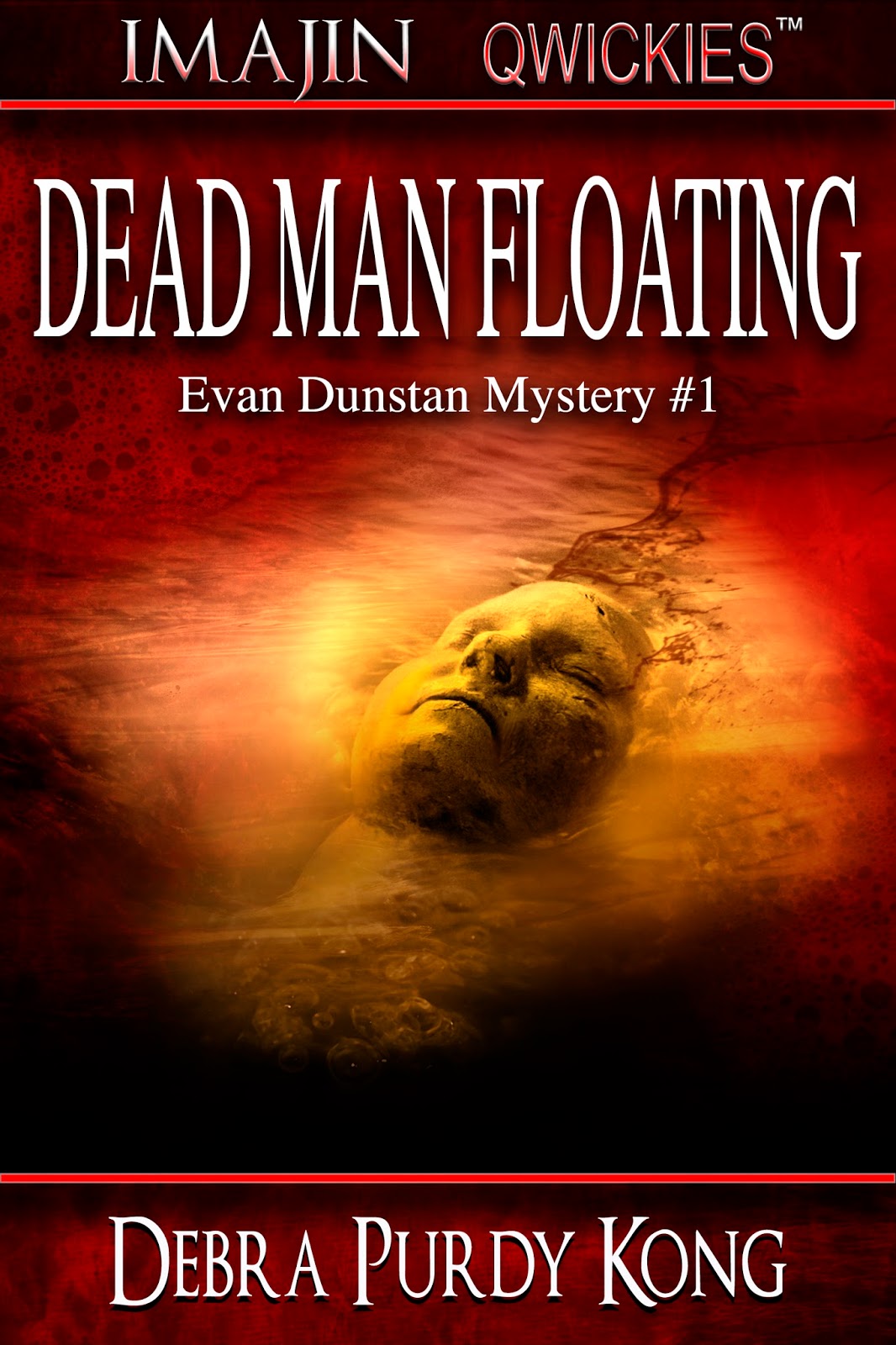
I’m delighted to announce that I’ve just signed a contract with Imajin Books to publish my second Evan Dunstan novella, A TOXIC CRAFT, later this year. It’s a pleasure to be working with such a terrific, marketing-savvy publisher again.

Set during a Christmas craft fair, A TOXIC CRAFT was great fun to write. Those of you who read the first Evan novella, DEAD MAN FLOATING, might remember Evan’s spunky grandmother and her two cronies, Flo and Agnes. Those three are at the center of the trouble in this story, and provide never-ending problems for Evan.

I’ll post more and reveal the cover once we get closer to publication date. Meanwhile, I’m sure there will be more editing to do over the coming weeks, but honestly, I’m looking forward to it.

If you haven’t read DEAD MAN FLOATING and are curious, free samples can be downloaded at amazon.com http://tinyurl.com/zelnx7x

Thanks,

Sunday, April 30, 2017

Embracing Failure

I love collecting quotes, and one of my favorites comes from an excerpt in a Writers’ Digest Magazine article years ago. I’ve kept the quote pinned to my bulletin board for so long that the paper’s yellowed. Here’s what it says:

Rejection is a writer’s best friend. “If you are not failing regularly,” Gregg Levoy observes in ‘This Business of Writing’,” you are living so far below your potential that you’re failing anyway”.

This statement still hits me in the gut.

Over the years, I’ve tried to analyze and define what success and failure means to me in terms of my writing life. I’m still working on it. So far, my only definition of failure is to quit before my most important goals are achieved. Believe me, there are days when I’ve been tempted.

Last week, I read an interesting blog called “The 7 Differences Between Pros and Amateurs”. The one that jumped out at me is point #5, "Amateurs Fear Failure. Pros Crave It." The piece goes on to say that failure can teach you more than success ever will. When it comes to writing, publishing, and promoting, this is completely true.

I learned a long time ago that rejection or lousy reviews or poor sales is a part of many writers’ lives. But embracing those disappointments and learning from them is crucial. So this year, I’m planning to take more risks by asking for more reviews and guest blogging opportunities. I’m going to take more chances on new marketing and selling opportunities. Because if I don’t try, I’m failing anyway, and that’s not going to happen.

Here are more great quotes about failure:

“Feeling sorry for yourself, and your present condition is not only a waste of energy but the worst habit you could possibly have. – Dale Carnegie.

“Success represents the 1% of your work which results from the 99% that is called failure.” – Soichiro Honda

“Success is not built on success. It’s built on failure. It’s built on frustration. Sometimes it’s built on catastrophe.” – Sumner Redstone


Sunday, April 23, 2017

Crime Writers of Canada’s Arthur Ellis Nominees

Crime Writers of Canada announced this year’s slate of nominees for the Arthur Ellis Awards at events across the country. Established in 1984, the awards are named after the nom de travail of Canada’s official hangman. (Yes, our country once had one). The Arthur Ellis awards celebrate excellence in crime writing. Eligible books were published in 2016, with the exception of the Unhanged Author, which awards a prize to the year’s best unpublished novel. Good luck to all of the nominees:
Best Novel
Kelley Armstrong, City of the Lost, Penguin Random House of Canada
Michael Helm, After James, McClelland & Stewart
Maureen Jennings, Dead Ground in Between, McClelland & Stewart
Janet Kellough, Wishful Seeing, Dundurn Press
Donna Morrissey, The Fortunate Brother, Viking Canada
Best First Novel sponsored by Kobo
Ryan Aldred, Rum Luck, Five Star Publishing
R.M.Greenaway, Cold Girl, Dundurn Press
Mark Lisac, Where the Bodies Lie, NeWest Press
Amy Stuart, Still Mine, Simon & Schuster Canada
Elle Wild, Strange Things Done, Dundurn Press
Best Novella: The Lou Allin Memorial Award
Rick Blechta, Rundown, Orca Book Publishers
Brenda Chapman, No Trace, Grass Roots Press
Jas. R. Petrin, The Devil You Know, Alfred Hitchcock Mystery Magazine, Dell Publishing
Linda L. Richards, When Blood Lies, Orca Book Publishers
Peter Robinson, The Village That Lost Its Head, Ellery Queen’s Mystery Magazine, Dell Publishing
Best Short Story
Cathy Ace, Steve’s Story, The Whole She-Bang 3, Toronto Sisters in Crime
Susan Daly, A Death at the Parsonage, The Whole She-Bang 3, Toronto Sisters in Crime
Elizabeth Hosang, Where There’s a Will, The Whole She-Bang 3, Toronto Sisters in Crime
Scott Mackay, The Ascent, Ellery Queen’s Mystery Magazine, Dell Publishing
David Morrell, The Granite Kitchen, Ellery Queen’s Mystery Magazine, Dell Publishing
Best Book in French
Marie-Eve Bourassa, Red Light: Adieu, Mignonne, Groupe Ville-Marie Littérature, vlb éditions
Chrystine Brouillet, Vrai ou faux, Éditions Druide
Guillaume Morrissette, Terreur domestique, Guy Saint-Jean Éditeur
Johanne Seymour, Rinzen et l’homme perdu, Libre Expression
Richard Ste-Marie, Le Blues des sacrifiés, Éditions Alire
Best Juvenile/YA Book
Gordon Korman, Masterminds: Criminal Destiny, Harper Collins Publishers Ltd.
Norah McClintock, Trial by Fire, Orca Book Publishers
John Moss, The Girl in a Coma, The Poisoned Pencil-Poisoned Pen Press
Caroline Pignat, Shooter, Tundra Books
Eva Wiseman, Another Me, Tundra Books
Best Nonfiction Book
Christie Blatchford, Life Sentence: Stories from Four Decades of Court Reporting — or, How I Fell Out of Love with the Canadian Justice System, Doubleday Canada
Joe Friesen, The Ballad of Danny Wolfe: Life of a Modern Outlaw, Signal McClelland & Stewart
Jeremy Grimaldi, A Daughter's Deadly Deception: The Jennifer Pan Story, Dundurn Press
Debra Komar, Black River Road: An Unthinkable Crime, an Unlikely Suspect, and the Question of Character, Goose Lane
Bobbi-Jean MacKinnon, Shadow of Doubt: The Trial of Dennis Oland, Goose Lane
Unhanged Arthur for Best Unpublished First Crime Novel sponsored by Dundurn Press
Mary Fernando, An Absence of Empathy
S.J. Jennings, The Golkonda Project
Charlotte Morganti, Concrete Becomes Her
Ann Shortell, Celtic Knot
Mark Thomas, The Last Dragon
The winners will be announced at a Gala Awards Dinner in Toronto on May 25, 2017. For more information, check out Crime Writers of Canada’s website at www.crimewriterscanada.com


Sunday, April 16, 2017

The Lazy Way to Publication

Over the years, I’ve been approached by a number of people who want me to write their story for them…and find a publisher, oh, and maybe an agent. The conversation always comes down to “You do it and we’ll split the royalties.” Honestly, I’m not sure I can hide the chagrin on my face anymore.

These people might have taken the occasional writing course or joined a critique group just long enough to sense how daunting writing a book can be, never mind selling and promoting it. Sometimes, the wannabe author is someone I’ve met socially, or while selling my books, or through a friend.

I call this the lazy way to getting published. Now, let’s be clear. I have nothing against someone wanting to hire a ghostwriter, and I often recommend reputable publishing services to others, but I would never take on the project myself. In fact, I’m highly suspicious of people who want to get from point A to Z without doing a shred of the leg work required, or who refuse to spend a single penny on a good editor, or writer, for that matter.

I’ve given workshops that outline the importance of having a social media presence, and offer simple how-to tips, only to have the occasional attendee say at the end, “I don’t really have to do all that, do I?” Of course not, provided they don’t want to sell any copies. My answer is a bit more diplomatic than that in person, but it amounts to the same thing. If you don’t invest in your idea without doing your homework and spending some dollars, then you won’t get far.

There’s a lot of nice people out there with great stories to tell, but it’s a slippery road to hell to commit your time and skill to someone who doesn’t understand what it takes to write, publish, and promote a book.


Sunday, April 02, 2017

One of the Worst Writing Tips I've Heard

One of the more common writing tips I’ve heard throughout the years is to make sure the protagonist in my books is likable. This is particularly applicable to female protagonists. The consensus was that if readers don’t like her, they’re going to put the book down. So, I’ve worked hard to create at least somewhat likable characters over the years, albeit still flawed.

I’ve come to realize, though, that likability is a matter of reader taste, and to some degree, genre. I write mysteries, which offers a diverse spectrum from light cozies to noir thrillers. Generally, (and of course there are exceptions) cozy readers prefer a likable protagonist who isn’t an alcoholic or drug user. Thriller fans prefer a protagonist who doesn’t spend her afternoons drinking tea with a cat on her lap.

I write amateur sleuth mysteries, which incorporates dark and light worlds, so it can be a bit of a risk, as I might not please either group. Still, I feel compelled to write books and create character that are meaningful to me. All readers bring their experiences, biases, and preferences to the table when it comes to books, and that’s fine. The truth is that no writer will please everyone.

As a writer and a reader, a likeable character isn’t as important to me as a compelling and complex character with a an obstacle to climb or a mission to accomplish. It can be small or global, but it has to matter to the protagonist.

I came across an interesting a piece in Bookriot a few days ago, called ‘100 Must-Read Books With Unlikable Women’. The author argues that female characters are given short shrift by being labeled annoying, among other things. They aren’t allowed the same leeway that male protagonists are, and receive more complaints from readers for their un-likability. Hmm. She might have something there.

I browsed the list to see if there were any mysteries and sure enough, I found Gone Girl and Dark Places by Gillian Flynn. There were also quite a number of mainstream novels. I have to admit, I didn’t browse through the entire list, so I’m not sure if there are any fantasy or romance titles there.


But the author makes a good point: there are plenty of great novels featuring unlikable characters in terrific novels. Really, did you find Scarlett O’Hara likable? I sure didn’t, but this didn’t stop me from enjoying the story. In fact, Scarlett’s unlikability was crucial to the story’s success. So go ahead, write unlikable female characters, despite what some of those writing instructors tell you. Just ensure that you’ve got a memorable, compelling story to tell.


Sunday, March 12, 2017

Avoiding Burnout

An interesting phenomenon has been noticed occurred over recent months, one that has been mentioned on a number of different blogs. Bloggers have discovered that a number of familiar names in indie publishing are no longer around. Frequent posts to favorite networking sites have disappeared, there's no newly published books, and websites haven’t been updated in some time.

Some believe that the huge number of books now being published annually (I hear that it’s two million or more) has so glutted the market that many authors aren’t selling nearly as many books as they did between 2010 and 2015. Substantial royalties have therefore diminished, forcing some to return to day jobs. Still, others seem to have given up. Keep in mind that a small percentage of authors, particularly in the romance and erotica markets, are still making good incomes.

Another theory also factors in here. Burnout. On indie sites like Kindleboards, authors were touting the necessity of putting out a book every three months to stay visible and on top of Amazon’s mysterious algorithm. To me, this is akin to investing in stocks you don’t know much about, but hoping they’ll rise in your favor anyway. A number of authors have tried to do this with varying degrees of success. As those who follow my blogs know, I’ve tried to step up my pace, but it’s truly difficult.

So, I was really interested by a recent blog that discussed burnout…what it really is, and how to overcome it. Author BelleCooper identifies burnout as a combination of exhaustion, cynicism, and inefficacy. It seems that burnout is not just a matter of overworking, but of losing enthusiasm for what you’re doing to the point where you become inefficient and unproductive. I’ve seen evidence of this in my own life, so I’ve been taking steps to avoid complete burnout.

First, I put four of the six writing projects away to focus on just two. Secondly, I’m improving my diet, getting more rest when needed, and exercising more. Third, I’m adjusting my life/work balance by spending more time with friends, planning, weekend getaways, and even a couple of vacations over the next twelve months. A rarity for me!


It’s already helping. There’s more I can do, and Cooper has other great tips. If you feel like you’re working too hard and are becoming jaded by the lack of reward for your efforts, then please read her blog. Maybe it will help.

Sunday, February 12, 2017

My Book Cover Dilemma

I was in the mall this week, looking at all the winter clearance sale racks. It’s something I don’t do often, mainly because the many choices in department stores make my head spin. I’m better suited to the smaller boutiques, where there are maybe 40 racks instead of 90.

I’m discovering that the same is true when it comes to choosing a suitable book jacket image for my fifth Casey Holland mystery, and this is causing me a great dilemma. Even by using key words, there are thousands upon thousands of images to go through.

I remember doing this when I chose the cover for Fatal Encryption back in 2008, and it took a long time. But I was very clear about the image I wanted, a decision I don’t regret to this day. The cover for this book is a little more complicated, which adds to my dilemma.

Knock Knock is a story about a group of vicious home invasions that have been targeting seniors, many of whom also ride a particular Vancouver bus. Since my protagonist is a transit security officer for a bus company called Mainland, Public Transport, each cover has a bus related theme on the cover. They were designed by the in-house designer of my former publisher.

This time, a large part of the story takes place in residences. Thus, the second dilemma. Searching under the categories of mystery, home invasion, homes, and buses has presented some interesting images, and the choices are beginning to make my head spin.

To save costs and time, I was hoping to choose an image before I hire a jacket designer, but I’m now wondering if I should simply leave it to the expert.

Incidentally, I’m also intending to produce a Casey novella this year, the title of which is Man in a Gold Satin Thong. Really, the cover’s a no-brainer for that one, don’t you think?

If anyone has any suggestions to assist me in my search, please let me know! Thanks!


Sunday, January 08, 2017

Beneath the Bleak New Moon 2nd Edition Released!

I’m happy to announce that my third Casey Holland mystery, Beneath the Bleak New Moon has finally been reissued in ebook format!

I had plan to release this title back in November, but you know what they say about real life interfering with the best laid plans…However, after Christmas I caught up and am now working on the fourth installment, which should be released later this month.

Beneath the Bleak New Moon is available at:


I also have a couple of local gift stores selling the paperback version, which you can find on the homepage of my website, or you can contact me if you wish a signed copy.

Here’s the blurb:

The unthinkable happens while transit security officer, Casey Holland, is dealing with an unruly pair of teenage twin girls on the M7 bus. Young journalist, Danielle Carpenter, is determined to identify the racers and asks for Casey’s help.

But helping Danielle isn’t easy. She’s not only reckless but on a personal vendetta. When Danielle goes missing and a suspected racer is murdered, Casey is compelled to step up the search for answers.

The third installment in the Casey Holland Mysteries, Beneath the Bleak New Moon, is a wild ride that will hold you in suspense until the end.

Praise for Casey Holland mysteries:

The National Post - “Kong’s writing is no-nonsense at best . . . the end result is a mystery that fits the bill.”

The Hamilton Spectator -  “A good read with urban grit and a spicy climax.”

Quill & Quire - “The novel’s short, punchy chapters whisk the story along to a thrilling climax, while the characters’ relationships and rivalries provided a strong emotional anchor.”

Crime Writers of Canada - “Purdy Kong keeps the action fast and furious . . . Casey is a perfect heroine for our times, a combination of thought and action.” – Lou Allin


Sunday, January 01, 2017

Looking Back and Looking Ahead

As I’ve written in the past, I’m not big on making New Year’s resolutions, but I do have goals. To me, a resolution and a goal aren’t quite the same thing. Resolutions involve one or two firm decisions to make a change or improvement no matter what. Goals are less stringent and don’t necessarily mean making a big change, but rather tweaking things here and there.

In a way, it’s also an odd contradiction for me. Looking back on my year-in-review this time last year, my plan was to cut back for 2016, as I’d taken on too much in the two previous years. And I did cutback. I gave fewer workshops, which required a fair bit of prep time, and reduced the amount the number of blogs I wrote.

Although I didn’t publish any new work this year, 2016 was still a year for goal achieving. I finally obtained my rights back to my Casey Holland novels and reissued five of six novels in multiple ebook platforms. This project is nearly complete, as I work on the last Casey novel now.

I’ve also been working on five different writing projects: two novellas and three novels. One of them is a fantasy which has been new and interesting challenge. It’s something I’d put off for years, but started last January. Now, I’m almost finished the first draft.

Despite the cutbacks on workshops, I still participated in 18 writing-related events this year; many of which were bookselling opportunities at a wide variety of locales. Have you ever sold books at a winery? It’s great fun. You get to drink, your customers drink, and everyone is friendly and chatty.

While book sales chugged along, I also managed to read and review 47 books, and write about the same number of blogs. So, will I cutback a little more this year? Perhaps. I’m still doing my part-time day job and enjoying it. My mother’s dementia becomes an increasing challenge for our family, but that’s life. In 2017, I also hope to publish another Casey Holland mystery and one novella.

If had to make a resolution for 2017, it would be to continue to do my best with whatever time, energy, and skill I have. We’ll see how it goes a year from now. Meanwhile, I wish all of you a creative, productive, and healthy new year!


Thursday, December 01, 2016

MYSTERY NOVELLA, DEAD MAN FLOATING $.99 sale, DEC 1-7th!

Once again, Imajin Books has launched its pre-Christmas sale! My first Evan Dunstan mystery, DEAD MAN FLOATING is on sale for $.99 until Dec. 7th! If you’re looking for a quick, fun amateur sleuth story with an edge and a bit of humor, then meet campus security guard Evan Dunstan.


Here’s the blurb:

One wrong decision…

Security guard Evan Dunstan didn’t expect to find a body floating in a campus stream. An empty vodka bottle nearby suggests that the highly despised George Krenn, head of the plumbing department, had drunkenly fallen in. Refusing to let the death of a vile man ruin his romantic plans, Evan decides to leave the body for the next shift to find.

One friend in trouble…

When it’s discovered that Krenn was murdered, Evan has a lot of explaining to do. So does his friend Sully, Krenn’s least favourite student. Evan uses his hacking skills and campus knowledge to keep them both out of jail, but the investigation forces him to question Sully’s innocence.

One mystery to solve…

Uncovering the truth proves to be more than challenging. It may cost Evan his job, his friendship, and his woman. Will Evan find the killer, or will the killer find him first?

Thanks!


Sunday, November 27, 2016

The Bittersweet Irony in Valuing a Book

Since 2003, I’ve been receiving, along with many other Canadian authors, an annual payment from Access Copyright Canada. This organization is a nonprofit, national organization who licenses the copying of the work of Canadian creators (including visual artists, publishers, and others) to educational institutions, businesses, governments and so forth. They then pass the monies collected onto the copyright holders. (You can read more about this on their website). 
My highest income came in 2012 (over $870, however, after that time, the Supreme Court of Canada added a “fair-dealing” provision to the copyright law and, let’s just say, it’s been a game changer.

Over recent years, educational institutions and others have since challenged how much they should pay to share, remix, or copy someone’s work. Access Copyright has since been forced to significantly reduce payments to copyright holders.

Despite adding a new book to the roster nearly every year, the cheque I received this year was just over $200.00. A recent article in Quill and Quire reports that the organization might have to reduce payments by as much as 55% in 2017. You can read the reasons HERE.

In a world where writers earn well below the poverty line as it is, and people (I’ve seen them) think it’s quite okay to photocopy an entire book, it’s just another unneeded obstacle in the quest to be paid for our hard work.

Ironically, I’ve been selling my mystery novels at Christmas craft fairs this month, and have found that customers are happy to pay full value for books primarily because they love mysteries and believe in supporting local authors. These people aren’t loaded with money. But they are loaded with goodwill, a love of reading, and respect for artists.

You could well argue that this is an apple and oranges issue; that buying an author’s book at a fair is hardly the same as paying a pittance, if anything, to photocopy copyrighted work for teaching and research purposes. But for me, it all boils down to the same issue: what value do people place on a book? Does it have any value at all? Or only as long as it doesn’t interfere with their own agendas and priorities? Maybe everyone, including, businesses, governments, educational organizations, and even the Supreme Court of Canada, should be giving this further serious thought.


Sunday, October 02, 2016

Defeating Monster Fears and Relentless Self-Criticism

Let’s face it, negative self-talk can be a crippling experience for writers. I suspect that it’s an inevitable part of being human. I also suspect that the problem’s compounded when writers face internal or external pressure to write well and quickly in order to earn a living from their words. It’s a wonderful goal, but it’s often sabotaged by all kinds of thing, including ourselves.

Fear and self-criticism have been on my mind lately, as I grapple with my first foray into fantasy writing, a genre I love and read widely. I’ve outlined only up to a point and I’m now winging it, which is both exhilarating and scary.

While I work on the book every day, it’s only perhaps for forty minutes before heading out to the day job. I’m also trying to finish up other writing projects. The deeper I go with the fantasy, though, the more uncertainty I’m feeling. I’m nearly 200 pages into the story, and I’m beginning to forget what I wrote in the first 100 pages which is worrisome.

I find myself thinking that completing this novel to be publication-ready will difficult and take much longer than I thought. This isn’t helpful self-talk, but I’m working on more of a can-do, it will get done approach. The thing is, it all boils down to a fear of failure, right?

You’ll understand why I’ve been drawn to two blogs from writers who have thoughts about fear and self-criticism. The first is a short piece by ToddBrison who found freedom from fear through six words, nobody cares what you are doing. For him, this was a freeing experience that allowed him to get back to writing.

The second blog is by Maria Popova and is more of a dense essay, but an interesting one that discusses the important difference between critical thinking and critical complaint, which she also refers to merciless self-criticism. There’s plenty of food for thought in this piece.


I expect that writers will never banish self-criticism, and perhaps we shouldn’t, but the danger is in taking things to an irrational realm that destroys potential. I have no intention of letting that happen. I’d rather try and make mistakes—even big ones—then be too paralyzed by fear to try at all. As mentioned, though, paralysis lurks in my conscience these days. I can feel it waiting to strike, and that’s the monster I plan to defeat.


Sunday, September 18, 2016

The Opposite of Dark, Second Edition Ebook is Here!

Late this spring, I reached an amicable agreement to obtain all of my rights back to my first four Casey Holland mysteries. While TouchWood Editions was a great publisher to work with, it was time to move on.

I’m delighted to relaunch a second edition, ebook version of first installment, The Opposite of Dark. I’m hoping to release all four books before the year’s over, but I’m working on several new writing projects, and real life commitments swallow up many hours per week, so who knows?

The plan is to release the fifth installment, Knock Knock, in both print and ebook versions next year, which is exciting! More on that over the coming months!

After a lot of pondering and reading all sorts of advice on the subject, I’ve decided to price The Opposite of Dark at $3.99 US, which feels right, but time will tell. Meanwhile, the book’s available at:


And the blurb:

When the police tell transit security cop Casey Holland that her father was murdered the previous night, Casey doesn’t believe them. Why would she, given that she buried her dad three years earlier? Desperate to understand what’s going on and if the man she buried really was Marcus Holland, Casey attempts to unravel the truth about her past.

Filled with twists and turns and the unwelcome help of a persistent stranger, Casey’s quest takes her to Europe where startling revelations place her in danger. An associate of her father believes that Marcus stole three million dollars from him and he wants it back. Convinced that Casey can find the money, the man won’t stop until he either has the cash or she and those she loves die.

REVIEWERS SAY:

“This is truly a fast-moving, action-packed thriller with many twists and turns, many suspects, and many secrets and lies. I would have read this book at one sitting were I able to, I was so involved in the story.” Nightreader

“This is one fast-paced novel filled with characters that will definitely keep the reader wondering just who can Casey trust. This is a definite must read.” Fran Lewis

“This book is a page-turner. Purdy Kong creates rounded, believable characters and the story is complex enough to satisfy but not defeat you. I was never quite sure “who dun it”. Just what I love in a good mystery novel.” – Julie H. Ferguson, Author of Book Magic


Sunday, September 04, 2016

Get Ready for This Year's Word Reading and Writing Festival

Autumn has nearly arrived and with it comes the 22nd annual Word Reading and Writing Festival. I’ve participated at the Vancouver event nearly every year since it began and I can tell you that it’s a terrific experience.

Word has expanded over the years and now runs for five days in Vancouver. This year, events will start on Wed., Sept. 21st and end in the main event on Sunday, Sept. 25th, at Library Square, (at the main library on Georgia Street). You can find a schedule of events and the different venues through the week HERE.

This is a free festival with music, author readings, panel discussions, workshops, and activities for the kids. For those of you who don’t live in Vancouver, Word (also known as Word on the Street) will be held in Halifax (Sept. 17), Saskatoon (Sept. 18), Lethbridge (Sept. 24), and Toronto (Sept. 24). You can find further information about those events HERE.

I’ll be helping out at the Crime Writers of Canada table with other writing colleagues from 1 to 3 pm, but please drop by to visit our table whenever your schedule permits. Fellow crime writers will be there from 11 to 5:00 pm, and they’ll have lots of good information to share about local writers and Crime Writers of Canada.

I’m not sure of the exact location of our table yet, but volunteers give out free programs that allows you to find everyone who’s representing their organization, magazine, publishing house, indie books, and so forth. It really is a paradise for book lovers, so I hope to see you there!


Sunday, July 31, 2016

Purpose Vs. Point in Fiction

I used to be a fan of The Walking Dead TV series. I was totally enthralled with the first year, but not so much after the second, and even less so after the third. This had nothing to do with the gore and horror; after all, this is a zombie-focused survival story, so it comes with the territory. I also liked the characters and their backstories.

By the fourth season, I found the show increasing difficult to watch as more key characters were being picked off by zombies and others. Admittedly, it was interesting to see the change in the main characters as they learned to live with fear and loss, and sharpen their survival skills.

Clearly, the characters’ purpose was to stay alive, and there were plenty of internal and external conflicts providing huge obstacles to do so. So, why did I lose interest? Because I started to wonder what was the point of all this constant fighting and running away, only to settle somewhere else and have hopes dashed again?

Periodically, the series provided a glimmer of hope that there were safe places to go to, that someone competent and sane would be in charge and offer a safe haven, but efforts to find it inevitably failed, at least during the seasons I watched.

All of this got me to thinking about other stories, where the stakes are high, the conflict and tension immense, and the characters intriguing. Why did those stories work for me while this one didn’t? The answer is that there was always an end-game, a final success that would end the misery, leaving the hero triumphant, albeit physically and/or emotionally damaged.

Sure, some will argue that each storyline in The Walking Dead ends in triumph as Rick and company live to fight another day. But, I still say, why bother? During the years I watched, there wasn’t a cure on the horizon and adequate help was nonexistent.

I realize that everyone has their own definition of what a story’s point is. Why is something being written? What is the reader, or viewer, getting out of it? Is the satisfaction strong enough to keep watching?

My favorite genre is mysteries and they have been since I was a girl. I love that the bad guys get caught and that justice is served. For me this is emotionally satisfying. The story has a point as the protagonist struggles to find the killer and winds up triumphant.


Regardless of whether you’re writing scripts, novels, or nonfiction, make sure your stories have a point, or readers might not stick with you.