Showing posts with label guest blogger. Show all posts

Sunday, August 28, 2016

Featuring Guest Blogger, Judy Penz Sheluk

It’s a pleasure to welcome back mystery author, Judy Penz Sheluk. Judy has just released her second mystery, Skeletons in the Attic, which is the first book in her Marketville Mystery Series. Her debut mystery, The Hanged Man’s Noose, was published in July 2015. Judy’s short crime fiction appears in World Enough and Crime, The Whole She-Bang 2, Flash and Bang and Live Free or Tri. She’s a member of Sisters in Crime, Crime Writers of Canada, International Thriller Writers and the Short Mystery Fiction Society. Find Judy on her website/blog at www.judypenzsheluk.com, where she interviews other authors and blogs about her writing journey.

Judy’s blog topic is “Don’t Wait for the Muse”

“There was a moment when I changed from an amateur to a professional. I assumed the burden of a profession, which is to write even when you don’t want to, don’t much like what you’re writing, and aren’t writing particularly well.” Agatha Christie.

I spent the better part of my teen years and early twenties reading Agatha Christie; in fact, I’ve read every one of her books, and credit Christie for my desire to write mysteries. But like Christie, for many years I was an amateur. Actually, amateur is overstating it. I was more of a “want-to be” writer. You know the type: the person who says they’re going to write a book “one day.”

For me, “one day” took about three decades from the time I put down Curtain, Hercule Poirot’s final mystery. In between, I worked as a Credit & Collections Manager, a Sales and Marketing Coordinator, and over the past thirteen years, a freelance writer and editor. It wasn’t my fault, you see. I was waiting for the muse to show up. I knew once the muse made an appearance I’d be ready to write that book.

Except the muse never came. I decided to take a creative writing class from Barry Dempster, an award-winning Canadian author and poet. It was Barry who told me, “The muse will never come unless you let her know you’re going to be there. Make time to write every day, even if it’s only for thirty minutes, even if all you’re doing is sitting there, staring at a blank page. One day, the words will come.”

They did. Faced with ten days off of all my freelance gigs, I started writing my first book, The Hanged Man’s Noose, on Christmas Eve 2011. I wrote every day, including Christmas and New Year’s Day. By the end of that ten-day period, I had a few chapters written. It never got easy…but it did get easier, and by February 2013, I’d finished writing and revising the book. Then I tried to find an agent, and when that didn’t work out, I went to work looking for a publisher.

I knew how elusive that muse could be, and I knew I should start another book, but I couldn’t bear to write the sequel to a book I hadn’t sold. I started Skeletons in the Attic, determined to make it as different from Noose as I could: Noose is written in third person, with multiple (primarily two) POVs. Skeletons, on the other hand, is written in first person, and entirely from the POV of the protagonist, Calamity (Callie) Barnstable. But this time, the Christie quote actually applied to me. Somewhere along the line, I’d stopped waiting for the muse to show up and graduated from want-to be writer to amateur writer to professional. Professional writer. Now that has a nice ring to it, doesn’t it?

Here’s a brief synopsis of Skeletons in the Attic:

What goes on behind closed doors doesn’t always stay there…

Calamity (Callie) Barnstable isn’t surprised to learn she’s the sole beneficiary of her late father’s estate, though she is shocked to discover she has inherited a house in the town of Marketville—a house she didn’t know existed. However, there are conditions attached to Callie’s inheritance: she must move to Marketville, live in the house, and solve her mother’s murder.

Callie’s not keen on dredging up a thirty-year-old mystery, but if she doesn’t do it, there’s a scheming psychic named Misty Rivers who is more than happy to expose the Barnstable family secrets. Determined to thwart Misty and fulfill her father’s wishes, Callie accepts the challenge. But is she ready to face the skeletons hidden in the attic?


Find Judy’s books on Amazon HERE:

Sunday, February 14, 2016

Introducing Guest Blogger, Luke Murphy

I’m delighted to introduce guest blogger, Luke Murphy, international bestselling author of Dead Man’s Hand (Imajin Books, 2012). Luke played six years of professional hockey before retiring in 2006. His sports column, “Overtime” (Pontiac Equity), was nominated for the 2007 Best Sports Page in Quebec, and won the award in 2009. He has also worked as a radio journalist (CHIPFM 101.7). He lives in Shawville, QC with his wife, three daughters and pug. He is a teacher who holds a Bachelor of Science degree in Marketing, and a Bachelor of Education (Magna Cum Laude)!

Today, Luke’s blog is Professional Hockey Player to Published Novelist. Enjoy!

From a family of avid readers, even as a child, I always had a passion for books. Whether it was reading novels on road trips or writing assignments in school, literature was always part of my life.

In the winter of 2000, after sustaining a season ending eye injury while playing professional hockey in Oklahoma City, I found myself with a lot of time on my hands, and a new hobby emerged.

I didn’t write with the intention of being published. I wrote for the love of writing, as a hobby. I continued to hobby write through the years, honing my craft, making time between work and family obligations.

Then I made a decision to take my interest one step further. I’ve never been one to take things lightly or jump in half way. I took a full year off from writing to study the craft.

I constantly read, from novels in my favorite genres to books written by experts in the writing field. My first two purchases were “Stein on Writing”, a book written by successful editor Sol Stein, and “Self-Editing for Fiction Writers” by Renni Browne and Dave King.

I read through these novels and highlighted important answers to my questions. My major breakthrough from Stein’s book was to “Show don’t Tell”. I had to trust my readers. I even wrote that phrase on a sticky note and put it on my computer monitor.

The Self-Editing book helped me learn how to cut the FAT off my manuscript, eliminating unnecessary details, making it more lean and crisp, with a better flow. I learned to cut repetition and remain consistent throughout the novel.

I continually researched the internet, reading up on the industry and process “What is selling?” and “Who is buying?” were my two major questions.

I attended the “Bloody Words” writing conference in Ottawa, Canada, rubbing elbows with other writers, editors, agents and publishers. I made friends (published and unpublished authors), bombarding them with questions, learning what it took to become successful.

Feeling that I was finally prepared, in the winter of 2007, with an idea in mind and an outline on paper, I started to write DEAD MAN`S HAND. It took me two years (working around full time jobs) to complete the first draft of my novel.

The first person to read my completed manuscript was my former high school English teacher. With her experience and wisdom, she gave me some very helpful advice. I then hired McCarthy Creative Services to help edit DEAD MAN’S HAND, to make it the best possible novel.

I joined a critique group, teaming up with published authors Nadine Doolittle and Kathy Leveille, and exchanging manuscripts and information. Working with an editor and other authors was very rewarding and not only made my novel better, but made me a better writer.

When I was ready, I researched agents who fit my criteria (successful, worked with my genres, etc.) and sent out query letters. After six months of rejections, I pulled my manuscript back and worked on it again. Then in my next round of proposals, I was offered representation by the Jennifer Lyons Literary Agency.

After months of editing with Jennifer, and more rejections from publishers, my dream was finally realized in April, 2012, when I signed a publishing contract with Imajin Books.

Note that Luke’s Book, Dead Man’s Hand will be free from Feb. 13 – 17th!

You can find it at:  http://ow.ly/hd4Xv

Review Blurbs for Dead Man’s Hand

"You may want to give it the whole night, just to see how it turns out."
—William Martin, New York Times bestselling author of Back Bay and The Lincoln Letter

"Dead Man's Hand is a pleasure, a debut novel that doesn't read like one,
but still presents original characters and a fresh new voice."
—Thomas Perry, New York Times bestselling author of Poison Flower

"Part police procedural, part crime fiction, Dead Man's Hand is a fast, gritty ride."
—Anne Frasier, USA Today bestselling author of Hush

Review Blurbs for Kiss & Tell

“Luke Murphy scores big with this deep psychological thriller. Just when you think you've got things pegged, Murphy serves up another twist. Fast paced and fun, you won't want to put this book down.”  —Tim Green, New York Times bestselling author of Unstoppable

“An intricately detailed and clever mystery featuring a tough minded but vulnerable protagonist with more than a few demons of her own. The twists and turns kept me guessing to the very end.”
—Christy Reece, New York Times bestselling author of Nothing To Lose

“Luke Murphy’s novel, Kiss & Tell, has lots of twists and turns, and police procedures where the good guy, in this case, Charlene Taylor, is not always good. The characters come to life with suspense, drama, explosive action, and an ending you never see coming.”
 —John Foxjohn, USA Today Best-selling author of Killer Nurse


Sunday, January 17, 2016

Introducing Guest Blogger, Lois Winston

It’s a treat to introduce award-winning, multi-published Lois Winston on this week’s blog. As you’ll see from her bio, Lois has a great deal of experience to share not only through her work as an author but as a literary agent.

USA Today bestselling and award-winning author Lois Winston writes mystery, romance, romantic suspense, chick lit, women’s fiction, children’s chapter books, and nonfiction under her own name and her Emma Carlyle pen name. Kirkus Reviews dubbed her critically acclaimed Anastasia Pollack Crafting Mystery series, “North Jersey’s more mature answer to Stephanie Plum.” In addition, Lois is an award-winning craft and needlework designer who often draws much of her source material for both her characters and plots from her experiences in the crafts industry. Visit Lois/Emma at www.loiswinston.com and Anastasia at the Killer Crafts & Crafty Killers blog, www.anastasiapollack.blogspot.com. Follow everyone on Tsu at www.tsu.co/loiswinston, on Pinterest at www.pinterest.com/anasleuth, and onTwitter at https://twitter.com/Anasleuth. Sign up for her newsletter at https://www.MyAuthorBiz.com/ENewsletter.php?acct=LW2467152513

Lois’s excerpt from her book offers some great insights to Dialogue and Narrative. Enjoy!

Being both a published author and a literary agent has given me a unique perspective on publishing. I know what it's like to be the writer whose only desire is to sell a novel, and I know what it's like to have to crush someone's hopes with a rejection letter. It wasn't until I started sending out those rejection letters that I began to have a better understanding of why so many writers receive them.

As it turns out, most manuscripts are rejected for one or more of ten basic reasons. Writers have control over some of these reasons but not all of them. Over the years I’ve given writing workshops and talks on this topic. Afterwards, many attendees often urged me to write a book on the subject, which I eventually did. Top Ten Reasons Your Novel is Rejected and How to Avoid Them shows writers how they can control more of their destiny by not falling prey to many of these reasons. The following is an excerpt from the book:

Dialogue and Narrative

Dialogue is one of two ways authors can show their stories. The other is active narrative (scenes where stuff happens.) Well-written dialogue, like well-written scenes, will do one of two things – either advance the plot and/or tell the reader something essential about the characters. Poorly written dialogue reads like filler and bores readers.

Although dialogue should sound natural and realistic, it needs to be written crisply. We all speak with lots of extraneous words and interjections. We constantly repeat ourselves. We uhm and uhr and stutter and stumble more often than not, unless we’re members of Toastmasters or championship debaters. Even though these things are natural and realistic in the real world, they have no place in dialogue. Good dialogue shouldn’t make the reader want to shout, “Let’s get on with it. Spit it out already!”

Dialogue should also be more than just chitchat. It should cut to the chase, not be filled with banal pleasantries.

Example of a poorly written dialogue scene:

“Whatcha want, gorgeous?” said a deep, gravely voice with a heavy Brooklyn accent. He sounded like Fran Drescher on steroids.

What I’d really like was two tickets to the ballet instead of two tickets to a pro-wrestling musical extravaganza. Dave really hated the ballet as much as I really hated pro-wrestling, but I couldn’t very well buy him something for his birthday that he didn’t like or want, could I? Although, somehow I couldn’t see him standing on line for even thirty seconds, let alone thirty minutes, to buy ballet tickets for my birthday. I ran my fingers through my mass of curly red hair and bit down on my lower lip as I wondered, did that mean I loved Dave more than he loved me?

“Hey, red, you like wanna stop like mooning over The Boulder’s tight ass and like tell me whatcha want?” continued the male counterpart of Fran Drescher in a loud, booming voice. I noticed several people turn toward the ticket counter. “Like I ain’t got all day, you know,” he continued, his voice getting even louder.

“Uhm, Nori?” said Reese, tapping her French manicured nails on the shoulder of my taupe colored Ralph Lauren linen cropped jacket, the one I’d bought on sale at Macy’s to match the pencil skirt I was wearing. “It’s your turn. You, er, want to tell the guy what you want, so we can like get out of here, maybe, and go get something to eat before our lunch hour is over?”

I hadn’t realized I’d made it to the front of the line and Mr. Fran Drescher was talking to me. How absolutely embarrassing! I felt the heat quickly creeping up my neck and into my cheeks as I slowly turned to look at him. He was as wide as Fran was thin. He must have weighed three hundred pounds. He wore a skin-tight sleeveless black T-shirt with the red “AWE” logo emblazoned across his massive barrel of a chest. Muscles bulged on top of muscles on arms that were completely covered in tattoos in every imaginable color of the rainbow from his thick wrists up to his bulging shoulders. He had the thickest neck I’d ever seen, a shaved head, and an enormous gold nose ring, large enough to easily fit on my wrist, hanging down from his nostrils to his chin. I wondered how he could eat with that large thing dangling over his mouth.

He slowly drummed his beefy fingers on the counter as he leaned across, casually leering at me, as he said in a very sarcastic voice, “Any day now, doll.”
~~~~~
Now, if the ticket seller is a pivotal character in the story, he needs to be mentioned in detail, but certainly there are better ways to do it. However, if this is the only time he appears in the plot (which it is,) he doesn’t need to be described in such detail. And that’s just the beginning of what’s wrong with this dialogue passage.

Tag lines (he said, etc.) should only be used when it would be confusing to the reader not to use them. If the dialogue is between two characters, tag lines are extraneous because it’s obvious who’s speaking. The dialogue alternates between the two characters. If there are more than two characters in the scene, the tag line can still often be eliminated by the use of narrative action.

Then there’s the body language, which is nothing but filler. Good writing will only have a character engaged in body movements that are important enough for the point of view character to remember later. For instance, if Nori only bites down on her lower lip when she’s trying to rationalize something to herself, then the lip biting is a tell. (Note: This is different from telling your story. A tell is an action or trait that gives insight into a character. It’s often used in mystery and suspense when ferreting out the bad guys.) Maybe Nori really knows Dave isn’t in love with her and has been trying to convince herself otherwise. But if the lip biting is merely a body gesture for the sake of a body gesture, it’s filler and doesn’t belong in the passage.

Adverbs in tag lines should be used as little as possible. Well-written dialogue should use verbs that are very descriptive to the action instead of relying on adverbs. That doesn’t mean you should never use adverbs. Just make sure there’s a good reason for using them. Otherwise, they become a crutch.

Finally, description for the sake of description has no place in a well-written manuscript, whether as part of a tag line, in dialogue, or in narrative. Describe only that which is important to what is happening to the characters in the scene. If the hero and heroine are running through the subway, screaming for help as they flee an ax-wielding serial killer, the heroine isn’t going to notice the overflowing trash can filled with empty Starbucks cups nor the way the hero’s sea green and turquoise paisley tie is flapping around his neck as they race for the exit.

Dialogue by its nature will speed up pacing. Internalization (inner thoughts, monologues) will slow pacing. There’s a place for both. Good writing will have a balance, and depending on the genre, might lean more toward one than the other. But keep in mind wherever possible, you should strive to show your stories, not tell them. Too much internalization will make editors’ and agents’ eyes glaze over and result in a swift rejection.

So let’s look at that same dialogue scene written as it appeared in the book:

“Whatcha want, gorgeous?”

Two tickets to the ballet? I smiled to myself. Dave hated the ballet as much as I hated pro-wrestling. Payback would come on my birthday.

“Hey, red, you wanna stop mooning over The Boulder’s tight ass and tell me whatcha want? I ain’t got all day.”

“Nori.” Reese nudged me out of my reverie.

That’s when I realized I had made my way to the head of the line, and the thick-necked guy with the nose ring and shaved head was speaking to me. (from Talk Gertie To Me by Lois Winston)

Buy Links:

Top Ten Reason Your Novel is Rejected


Talk Gertie To Me


Sunday, October 18, 2015

Welcome Guest Blogger: Kristina Stanley

I’m delighted to have mystery author Kristina Stanley guesting again this week. Kristina’s doing something amazing by launching her second full-length mystery, BLAZE, just three months after DESCENT was released. She’ll also be hosting a Facebook launch book party (the link’s at the end  of her blog). Kristina’s written an excellent piece called “Launching a Novel”. Enjoy!

Somehow I thought once I had a novel published the stress would disappear. To use a cliché, the joke is on me.

BLAZE will be released one week from today, and I can tell you releasing a second novel is more nerve wracking than releasing the first one. For the first release, I wonder if people were nice to me because DESCENT was my debut novel. Now, am I expected to be good at book launching? This thought is what is stressing me out. So deal with it, right?  

My way reduce stress is to be organized, and since I’ve organized my thoughts, I’ll share and maybe I can help someone out there with their launch.

Here are the steps that led to launching DESCENT and BLAZE:

  1. Sign with Imajin Books (http://www.ImajinBooks.com )
  2. Submit full manuscript to editor (editor and I both did 3 passes at novel)
  3. Send ARC to authors for a blurb to go on inside and outside cover
  4. Cover designed and agreed to by all
  5. Early praise received on ARC added to cover
  6. Write dedication, acknowledgements and letter to reader for inclusion on inside of book.
  7. Imajin Books sends edited manuscript to proofreader
  8. Imajin Books publishes novel, and I sit back and relax (ha ha).
Basic Launch and Post – Launch Process:

  1. Find places to guest blog and write a unique post for each site.
  2. Create author page on Amazon (or update for second book).
  3. Create a Facebook Launch party. Find authors who are willing to donate books for giveaways, advertise the event, and host the event.
  4. Send copies of novel to reviewers. This needs to be done early.
  5. Blog on my site 5 times a week. I used to blog twice a week.
  6. Comment and follow other blogs about writing, reviewing, and publishing.
  7. Participate in other Facebook launch parties and donate my novel as a gift.
  8. Promote other authors’ books and book launches.
  9. Promote novel on blog, Pinterest, Google+, Goodreads, Facebook (both personal and author site), LinkedIn, Twitter, online magazines, AuthorsDen, and Tumbler.
  10. This may be obvious, but say thanks every time someone helps me in the smallest way.
  11. I don't have an email list, but I probably should. This will be what I add next to my process.
 The journey of publishing is one big learning curve. So here is what I’ve learned so far:

  • It’s easier to sell books than to get reviews.
  • Other authors’ Facebook parties are a great way to increase visibility.
  • Not everyone will like your marketing methods and negative feedback is never fun.
  • I enjoy blogging and connecting with others online as much as I enjoy writing.
  • There are many generous people willing to help.
  • When Facebook friends shared they bought DESCENT others bought DESCENT too. This word of mouth concept really works.
  • Promoting others widened my network.
  • Marketing is hard work.
 In the spirit of launching books, my Facebook launch party for BLAZE (https://www.facebook.com/events/1630121803934943/) is next Sunday, October 25th from 4 to 6 PM EST. I would love to see you there.

For added Facebook excitement, Debra will be giving away a copy of DEAD MAN FLOATING at the BLAZE Facebook launch party. If you’re not familiar with a launch party, drop on by and chat with authors, maybe win a book, and socialize online. I’ve met some fun online friends this way.

Kristina’s Bio:

Kristina Stanley is the author of the Stone Mountain Mystery Series. Her books have garnered the attention of prestigious crime writing organizations in Canada and England. Crime Writers of Canada nominated DESCENT for the Unhanged Arthur award. The Crime Writers’ Association nominated BLAZE for the Debut Dagger. She is published in the Ellery Queen Mystery Magazine.

Before writing her series, Kristina was the director of security, human resources and guest services at a resort in the depths of the British Columbian mountains. The job and lifestyle captured her heart, and she decided to write mysteries about life in an isolated resort. While writing the first four novels, she spent five years living aboard a sailboat in the US and the Bahamas.


BLAZE:

Instead of exchanging vows, Kalin Thompson spends her wedding day running from a forest fire near Stone Mountain Resort, and the pregnant friend trapped with her has just gone into labor. Meanwhile, Kalin’s fiancé, Ben Timlin, hangs from the rafters of a burning building, fighting for his life. Can the situation get any hotter?

When the fire is declared as arson, finding the firebug responsible becomes Kalin’s personal mission. In the course of her investigation as Director of Security, she discovers that some people will go to extreme measures to keep her from exposing their secrets.


DESCENT:

When Kalin Thompson is promoted to Director of Security at Stone Mountain Resort, she soon becomes entangled in the high-profile murder investigation of an up-and-coming Olympic-caliber skier. There are more suspects with motives than there are gates on the super-G course, and danger mounts with every turn.

Kalin’s boss orders her to investigate. Her boyfriend wants her to stay safe and let the cops do their job. Torn between loyalty to friends and professional duty, Kalin must look within her isolated community to unearth the killer’s identity.

I love to connect with people online. I can be found at: 

Follow me on twitter, let me know you read this blog and I’ll follow you back. @StanleyKMS

Or comment on my Facebook page: https://www.facebook.com/KristinaStanley.Author

If you're looking for something to read and you haven’t read DESCENT yet, now is your chance before BLAZE comes out. Find it at:  http://mybook.to/Descent

And if you have read DESCENT, I’d be very excited if you pre-ordered BLAZE http://myBook.to/BLAZEbyKristinaStanley

Thank you, Debra, for hosting me.


Sunday, October 04, 2015

Introducing Guest Blogger: Sharon Rowse

It’s my great pleasure to introduce BC mystery author Sharon Rowse, who I’ve known since her first historical mystery, The Silk Train Murders was nominated for an Arthur Ellis award.

Author of eight books in two series, former human resources expert Sharon now spends her days writing and researching. Her love of history combines with her knowledge of human behaviour in books that seek out unique, forgotten bits of history, melding them with memorable characters in the mysteries she writes.

Sharon’s work has been praised as “impressive” (Booklist), “delicious” (Mystery Scene) and “well-researched and lively” (Seattle Times).

Sharon’s most recent work is the historical mystery THE TERMINAL CITY MURDERS, the fourth in a series, which is set in early 20th CenturyVancouver. The first novel in the historical series, THE SILK TRAIN MURDER, was a Crime Writer’s of Canada Best First Novel Award nominee.

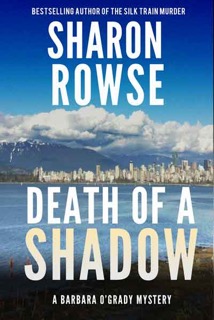
Sharon also writes contemporary P.I. novels that explore the dark side of the art world, the Barbara O’Grady series, which are also set in Vancouver. The fourth, and  most recent of those books, DEATH OF A SHADOW.

Learn more about Sharon’s work at: www.sharonrowse.com

Sharon’s topic is Writing Historical Mysteries, and it’s fascinating to read what she learned while researching Vancouver at the turn of the twentieth century.


I write two mystery series, one contemporary—the Barbara O’Grady series, and one historical—the Klondike Era mysteries. Why historical, you might ask. Isn’t that a lot of work, all that research? Well, yes. But I’ve always loved history, fictional and otherwise, and the way in which we understand our history fascinates me. In fact, one of my favourite books in university was a collection of six essays entitled What is History by E.H. Carr, which examined the cultural biases that historians bring to their work, and how it impacted their interpretation of history. History is usually written by the victors, after all.

When I sat down to write, I was drawn to the history of the West Coast, especially around Vancouver, Canada, where I live, since it was in many ways the last western frontier, and since much of its written history is very new—a couple of hundred years, at most. I was intrigued by how much was different from today—and how much was the same. I was also drawn to an era of great change—the end of the Victorian era and the beginning of the twentieth century.

One of the biggest elements in the growth of what are now major cities along the West Coast was the two to three year madness of the Klondike Gold Rush in the late 1890’s. Vancouver was a key departure point for would-be miners from around the world—a place to find supplies, transport and comrades for the gruelling journey to the gold fields. In a time of ever-increasing change, many of those men and women heading north to find their fortunes were leaving home to find a place where they could succeed, as much as they were looking for gold.

Usually you read stories about the men and women who came away from the Klondike Gold Rush with a fortune. I was intrigued by all those who didn’t—the ones who put everything they had into the effort, and came home broke. I spoke at length with a curator at the Klondike Museum in Skagway, Alaska. He told me about the journals of some of those miners who never found gold, and how many said the Klondike Gold Rush was the best thing that ever happened to them. The struggle itself was a transformative experience. Those words stayed with me.

All of this came together as I thought about writing a historical series. The hero, John Lansdowne Granville, is English, the fourth son of a minor aristocrat, who hasn’t found his place in late-Victorian society. After eighteen months on the creeks of the Klondike, he finds no gold, and winds up in Vancouver, hungry and broke.

As I research and write, I focus on what living in Vancouver was like then, and on the opportunities that might have existed for a man like Granville. What would he make of them? Vancouver was founded and settled by folks from elsewhere—though the Coast Salish were here long before the city was. I try to make the background and details for each book as historically accurate as possible, and to convey the feeling of the era.

I’m often struck by the differences a hundred or so years have made, as well as the things that haven’t changed. My challenge in writing these books is to convey the experience of that time through the eyes of my character, noting only the things they might have noted. All the while keeping each of my characters true to who they might have been, given their own cultural backgrounds and experiences. John Granville is very real to me, as is his friend Sam Scott and his incurably curious ladylove Emily Turner.

I continue to research while I’m writing, so I’ll often find information that will spark a new direction for the plot. In each book, however, my first inspiration is a piece of history that catches my imagination, and interests me enough to dig deeper. In the first book in the series, The Silk Train Murders it was the silk trains that raced across the continent carrying raw silk, which retailed for three-quarters of a million dollars per railcar, in 1899 dollars.

In The Lost Mine Murders, it was learning about a legendary lost mine near Pitt Lake, some 35 miles outside Vancouver, which has been searched for, and claimed lives, since the 1890’s. In The Missing Heir Murders, I was fascinated with the stories from many parts of BC about a long ago voyage of Buddhist monks from China who travelled down the West Coast from northern British Columbia to southern Mexico.

In my latest book, The Terminal City Murders, I was caught by the fact that banks were not allowed to provide mortgages until 1954. In 1900, all mortgage companies were private, and were often funded by British or American investment syndicates. Given the boom and bust nature and astronomical prices of the Vancouver housing market around this time—shades of 2015—it was a situation ripe for fraud. How could I resist?

I’m currently working on book five in the series, The Salmon Cannery Murders, and you can probably guess my inspiration for that one. I lived in Steveston, which was the hub of the salmon industry in 1900, for nearly a decade, before the last of the big canneries was torn down, and I think I absorbed the stories just by being there. It was finally time to write the book, which should be out early next year.

The funny thing is, my love of history seeps into my current day private eye series, too. Barbara’s cases often have roots in the past, and send her hunting for secrets that have lain hidden for many years as she races to solve a present-day problem.

CHECK OUT SHARON'S LATEST RELEASES, DEATH OF A SHADOW AND THE TERMINAL CITY MURDERS on Amazon!


Sunday, September 27, 2015

Introducing Guest Author: Judy Penz Sheluk

Over the past few weeks I’ve networked with many new people. One of the most dynamic, friendly, and helpful is Judy Penz Sheluk. Her debut mystery, THE HANGED MAN’S NOOSE was published July 2015 through Barking Rain Press. Her short crime fiction is included in The Whole She-Bang 2 and World Enough and Crime.
In her less mysterious pursuits, Judy works as a freelance writer/editor. She is currently Editor of Home BUILDER Magazine and Senior Editor, New England Antiques Journal.
Judy is a member of Sisters in Crime, Crime Writers of Canada, and International Thriller Writers. Find Judy at www.judypenzsheluk.com where she interviews other authors and blogs about the writing life.
I’ve posed some questions for Judy. You’ll find her answers insightful!

Tell us about your book

The Hanged Man’s Noose is the story of Emily Garland, a Toronto-based freelance writer who is offered a lucrative assignment in the small town of Lount’s Landing: find the real story behind a ruthless developer’s plans to convert an old schoolhouse on the town’s historic Main Street into a mega-box store. Recently dumped by her fiancé and tired of reporting on the same old condo stats, she jumps at the opportunity to relocate and start anew. Adding to her motivation is the fact that she blames the developer for her mother’s recent suicide.

When Emily arrives in town, she quickly learns that not everyone is on board with the mega-box store, least of all Arabella Carpenter, the outspoken owner of the Glass Dolphin, an antiques shop on Main. But Arabella is not alone in her opposition. Before long, a vocal dissenter at a town hall meeting about the proposed project dies. A few days later, another body is discovered, and although both deaths are ruled accidental, Emily’s journalistic suspicions are aroused.

Putting her reporting skills to the ultimate test, Emily teams up with Arabella to discover the truth behind Stonehaven’s latest scheme before the murderer strikes again.
Describe an average writing day. Do you have any rituals and schedules?
I try to write every day, though it doesn’t always work out that way. My goal is 6,000 words a week, which gives me a first draft in three months. Once I have the draft completed, I leave it for a couple of weeks and start something else. After a couple of weeks, I’ll go back and change the color of the font on the entire document from black to blue. Then I start rereading it, editing chapter by chapter as I go, and changing the font color back to black when I’m satisfied that the chapter works. I’ll repeat that process once more, and then send the manuscript to a professional editor for their review. Then I’ll revise based on their input. After that final revision, I’ll send the book out into the world for publishing consideration.
As for rituals, I drink lots of tea (Warmth by Tetley, a cinnamon rooibos blend) and water. I also listen to talk radio while I write: either Newstalk 1010 or Talk 640 Toronto.
What are you working on right now?
I’m on the final revision of Skeletons in the Attic: A Marketville Mystery. It also takes place in small town (Marketville) but with the exception of Arabella Carpenter, who has a minor role, all the characters are different than in The Hanged Man’s Noose. I’m also planning the sequel to Noose, this time with Arabella as the protagonist and Emily along for the ride.
Read the first four chapters of The Hanged Man’s Noose free, and get a 35% off coupon HERE

Check out Judy's book on Amazon!


Sunday, September 06, 2015

Introducing Guest Blogger: Melodie Campbell

I had the good fortune of working with Melodie Campbell while I served on Crime Writers of Canada’s board a couple of years ago. As you’ll see in her opening to THE GODDAUGHTER’S REVENGE (below the blog), her popular mysteries are funny and, as far as I’m concerned, she’s on her way to super stardom. Melodie got her start writing comedy. She has nine awards for fiction, including the 2014 Derringer and Arthur Ellis awards, eight novels, and over 40 short story publications. She is the Executive Director of Crime Writers of Canada. Enjoy her blog, called, KILLING PEOPLE IS WHAT I DO


“Why would you ever want to write about murder?” said the horrified relative.  “Why not write a nice little romance?”

Why indeed?

As I quickly added another relative to kill in my next book (you would be shocked how often that happens….) it occurred to me that there were many reasons to write about murder.

1.       It’s the challenge of creating the clever puzzle.  Plotting a mystery is like playing a chess game.  You always have to think several moves ahead.  Your reader is begging you to challenge them, and is working to beat you – meaning to guess the killer before your detective does - to the end.

2.      It’s plot driven.  Murder mysteries start with action – a murder.  Yes, characterization is important, and particularly motivation.  But murder is by nature an action, and thus something happens in the book you are writing.  And quite often, it happens again and again.

3.      It’s important.  This is murder, after all.  We’re not talking about a simple threat or theft.  A lot is at stake.  Murder is the final act.  The worst that can happen.  The end of it all.

4.      It’s a place to put all your darkest fantasies.  There are a few people I’ve wanted to kill in my life.  They did me wrong.  And while I do have a bit of a reputation for recklessness, I value my freedom more.  So what I can’t do in reality, I relish doing in fiction.

5.      Finally – it’s fun. This is the part I don’t say in mixed company (meaning non-writers and relatives.)  I can’t explain exactly why it’s fun – you’ll have to trust me on this part.  But plotting to do away with characters in highly original ways is a real power trip.  I’m smiling just thinking about it.

Of course, I can understand where some of the relative angst comes from.  In A PURSE TO DIE FOR, a gathering of relatives for a funeral results in the death of one or two. 


In THE GODDAUGHTER’S REVENGE, a cousin of Gina’s does her wrong.  So she does him back, in a particularly crafty and oh-so-satisfying way.
It was entirely accidental, that use of relatives.  Honest.  I wasn’t thinking of anyone in particular.
 Not much I wasn’t.

(You can follow Melodie at www.melodiecampbell.com)


Opening to THE GODDAUGHTER’S REVENGE (Orca Books)

     Okay, I admit it. I would rather be the proud possessor of a rare gemstone than a lakefront condo with parking. Yes, I know this makes me weird. Young women today are supposed to crave the security of owning their own home
     But I say this. Real estate, shmeel estate. You can’t hold an address in your hand. It doesn’t flash and sparkle with the intensity of a thousand night stars, or lure you away from the straight and narrow like a siren from some Greek odyssey.
     Let’s face it. Nobody has ever gone to jail for smuggling a one bedroom plus den out of the country.
However, make that a 10-carat cyan blue topaz with a past as long as your arm, and I’d do almost anything to possess it.
    But don’t tell the police.

THE GODDAUGHTER’S REVENGE  http://tinyurl.com/kmgjgsf
THE GODDAUGHTER http://ow.ly/dnObH
A PURSE TO DIE FOR  http://amzn.to/PysT2C