Showing posts with label mystery author. Show all posts

Sunday, August 28, 2016

Featuring Guest Blogger, Judy Penz Sheluk

It’s a pleasure to welcome back mystery author, Judy Penz Sheluk. Judy has just released her second mystery, Skeletons in the Attic, which is the first book in her Marketville Mystery Series. Her debut mystery, The Hanged Man’s Noose, was published in July 2015. Judy’s short crime fiction appears in World Enough and Crime, The Whole She-Bang 2, Flash and Bang and Live Free or Tri. She’s a member of Sisters in Crime, Crime Writers of Canada, International Thriller Writers and the Short Mystery Fiction Society. Find Judy on her website/blog at www.judypenzsheluk.com, where she interviews other authors and blogs about her writing journey.

Judy’s blog topic is “Don’t Wait for the Muse”

“There was a moment when I changed from an amateur to a professional. I assumed the burden of a profession, which is to write even when you don’t want to, don’t much like what you’re writing, and aren’t writing particularly well.” Agatha Christie.

I spent the better part of my teen years and early twenties reading Agatha Christie; in fact, I’ve read every one of her books, and credit Christie for my desire to write mysteries. But like Christie, for many years I was an amateur. Actually, amateur is overstating it. I was more of a “want-to be” writer. You know the type: the person who says they’re going to write a book “one day.”

For me, “one day” took about three decades from the time I put down Curtain, Hercule Poirot’s final mystery. In between, I worked as a Credit & Collections Manager, a Sales and Marketing Coordinator, and over the past thirteen years, a freelance writer and editor. It wasn’t my fault, you see. I was waiting for the muse to show up. I knew once the muse made an appearance I’d be ready to write that book.

Except the muse never came. I decided to take a creative writing class from Barry Dempster, an award-winning Canadian author and poet. It was Barry who told me, “The muse will never come unless you let her know you’re going to be there. Make time to write every day, even if it’s only for thirty minutes, even if all you’re doing is sitting there, staring at a blank page. One day, the words will come.”

They did. Faced with ten days off of all my freelance gigs, I started writing my first book, The Hanged Man’s Noose, on Christmas Eve 2011. I wrote every day, including Christmas and New Year’s Day. By the end of that ten-day period, I had a few chapters written. It never got easy…but it did get easier, and by February 2013, I’d finished writing and revising the book. Then I tried to find an agent, and when that didn’t work out, I went to work looking for a publisher.

I knew how elusive that muse could be, and I knew I should start another book, but I couldn’t bear to write the sequel to a book I hadn’t sold. I started Skeletons in the Attic, determined to make it as different from Noose as I could: Noose is written in third person, with multiple (primarily two) POVs. Skeletons, on the other hand, is written in first person, and entirely from the POV of the protagonist, Calamity (Callie) Barnstable. But this time, the Christie quote actually applied to me. Somewhere along the line, I’d stopped waiting for the muse to show up and graduated from want-to be writer to amateur writer to professional. Professional writer. Now that has a nice ring to it, doesn’t it?

Here’s a brief synopsis of Skeletons in the Attic:

What goes on behind closed doors doesn’t always stay there…

Calamity (Callie) Barnstable isn’t surprised to learn she’s the sole beneficiary of her late father’s estate, though she is shocked to discover she has inherited a house in the town of Marketville—a house she didn’t know existed. However, there are conditions attached to Callie’s inheritance: she must move to Marketville, live in the house, and solve her mother’s murder.

Callie’s not keen on dredging up a thirty-year-old mystery, but if she doesn’t do it, there’s a scheming psychic named Misty Rivers who is more than happy to expose the Barnstable family secrets. Determined to thwart Misty and fulfill her father’s wishes, Callie accepts the challenge. But is she ready to face the skeletons hidden in the attic?


Find Judy’s books on Amazon HERE:

Sunday, March 13, 2016

Introducing Guest Author, Katherine Prairie

I’m very happy to introduce Vancouver author Katherine Prairie, who’s intriguing background  offers plenty of material to incorporate into her fiction. Katherine, a geologist and IT specialist, stepped away from the international petroleum industry to follow her passion for writing. An avid traveller with an insatiable curiosity, you never know where you’ll find her next! But most days, she’s in Vancouver, Canada quietly plotting murder and mayhem under the watchful eye of a cat. She is an award-winning presenter and the author of the thriller THIRST.

I posed some questions for Katherine which she kindly answered. Enjoy!

Did you incorporate any real life experiences or settings into the story?

I’m a geologist and I spent much of my career in the international petroleum industry, but I also worked for a mining company one summer. For four months, I lived in a tent, hiked mountains and rode helicopters to/from work sites in the Canadian north. It was an experience like no other and through geologist Alex Graham, I try to share it with readers.

If you’re writing a series, what are the pros and cons? If you’ve written a stand-alone what are the pros and cons?

I didn’t set out to write a series but I came to really like Alex Graham and she fit well into other stories I had in mind. With a series, it’s much easier to deliver a rich personality because I have room to develop Alex over several novels. But it also means that I have to pace her journey carefully because I want readers to get to know her a little better in each story. And I always have to remember that every action she takes affects future novels!
 
What is the most satisfying character and/or story line you’ve ever written?

You might think that it’s Alex, but it’s my ER doctor, Eric Keenan. THIRST required a key medical scene that I struggled with for many weeks, but when it finally came together I was thrilled with the results. It wasn’t just the scene itself, but Eric’s character as well, and I found myself expanding the role of this very complex doctor and adding more medical scenes.
Name your top three how-to writing books, and/or the best novels you’ve ever read.
The Emotion Thesaurus by Angela Ackerman and Becca Puglisi is my go-to reference when I’m trying to convey emotion through character movement or expression.
I also like The Fire in Fiction by Donald Maass because it goes beyond the nuts-and-bolts of writing to deliver solid practical advice on how to develop compelling scenes.
And when I need to review the basics, it’s Sin and Syntax by Constance Hale.
                  Here's the back jacket blurb:

“THIRST leads the reader down a literary mineshaft where oxygen is running low and time short. Flavoured with insider expertise and a nature storyteller’s flair, THIRST is a gripping and fun ride.”  Daniel Kalla, bestselling author of NIGHTFALL OVER SHANGHAI.

You can order Katherine’s book through Amazon  Chapters and iBooks 

Connect with Katherine at:

Sunday, December 13, 2015

Introducing Guest Author, Barbara E. Brink

I’m delighted to introduce mystery author Barbara Ellen Brink today. Although I’ve known Barbara for a few years, we’ve never met in person. Barbara is one of those extraordinary people I’ve encountered through social networking. I remember reading her first book, Entangled, shortly after its release.

Barbara has gone onto produce a number of books including the bestselling Fredrickson Winery Novels. Her young adult series, The Amish Bloodsuckers Trilogy, was mentioned in NewsWeek Magazine as "a welcome departure from the typical Amish fare," and is now optioned for a screenplay! Her speculative thriller, Split Sense, won the 2012 Grace Award, and the following year her young adult novel, Chosen, was a finalist in the Grace Awards.

Barbara loves riding motorcycles, hiking, and reading thrillers that keep her up at night. Faith, family and friends are what keep her going...along with a habitual shot of chocolate at least once a day.

Today’s Barbara’s discussing her latest book, Roadkill.

Tell us about your book.

I released ROADKILL this past spring. It is the first in a brand new series I’m working on called, Double Barrel mysteries. Set in Michigan’s Upper Peninsula along Lake Superior, the tiny little town of Port Scuttlebutt, is the place for murder.

Blake and Shelby Gunner are my married sleuths. He is an ex-detective, who was once with the Minneapolis Police Department, and she is an actress of dinner theatre fame who, as her husband says, “speaks Shakespeare as a second language.”

After a shooting that resulted in a crippling injury and his need of a cane, they decide to move back to Blake’s home town where crime and shootings are pretty much nil and void. But not long after arriving in town, they are pulled into a hit-and-run cold case that puts them both in more danger than this little port has seen since the Civil War.

Did you incorporate any real life experiences or settings into the story?

My husband and I have visited the U.P. a number of times, both in the summer and the fall. It’s beautiful when the leaves are changing and the Great Lake is choppy and grey, and another kind of beautiful when the water is blue like a sheet of glass, reflecting sky and sun. The tiny little towns we stopped in were much like my imaginary Port Scuttlebutt. CafĂ©’s and antique shops, fishermen and miners. The last time we were there I told my husband I was going to write a series set along Lake Superior. It just seemed like the perfect place for murder mysteries. I took a lot of pictures so I could remember details and when I’m writing I take them out and look at them from time to time. They are great inspiration.

What are the pros and cons of writing a series?

Writing a series is like going home. I’ve already gotten to know these characters, and although they tend to grow and change with each story, they are still basically the same people. It’s familiar territory and I slip right back into their heads with ease. A series is also very popular with readers because they fall in love with certain characters and want to continue to visit their old friends.

The cons of this can be tricky. Sometimes writers get too familiar with their characters and/or lackadaisical with the writing, as though they no longer have to be fully engaged. Sometimes the stories start feeling like a rehashed episode of Murder She Wrote. Another con would be if I had someone like Kathy Bates in the movie Misery as my “biggest fan.” I could NEVER end that series safely, right?
What are you working on right now?

I am working on the second book in the Double Barrel Mysteries. (Still untitled at this time.) Blake and Shelby Gunner have officially become private eyes and opened Double Barrel Investigations. Their first case is to solve the murder of a local man’s ex-wife before he’s convicted of the dastardly deed. It could be tricky, since her body was found buried beneath his woodpile.

ROADKILL can be purchased at:


Sunday, November 22, 2015

A Hard-Won Milestone

Today, while selling my six mystery titles at a Christmas craft fair, I hit a milestone. I sold my 1,200th print copy of my first self-published mystery, Taxed to Death. When most unknown authors barely sell 100 print copies of their novels these days, (or so I’m told—I don’t know the actual number) this may seem like quite a feat, and it is, but not for the reason you might think, i.e. making money. You see, this didn’t milestone didn’t occur easily or quickly, and that’s the point I want to stress.

I’ve talked with a lot of writers and crafters over the last five years who all want to sell their products and make money, understandably. But I’ve also come across too many people who expect quick success. My craft fair season, which is from early November to mid-December involves both small high school craft fairs plus large three-day events. Time after time, I listen to vendors complain at the six-hour high school fairs (table rentals are $35 to $40) about not having cleared a $600 profit. I average $150.00 profit at high school fairs, and I’m happy with that. Hey, I don’t have lofty expectations. Craft fairs and, dare I say all bookselling events, are unpredictable. But if there’s one thing I’ve learned in life is that tenacity pays off.

As I mentioned, selling Taxed to Death hasn’t been an easy ride. Would you be surprised if I told you that the book was published twenty years ago? I still sell it because I believe in my work and because the story’s centered around fraud, a more timely topic today than it was when I was first wrote about it.

Here’s the thing, though. I had to overcome a lot of hurdles to sell that book, and to be honest, there were years when I made little effort to sell Taxed to Death at all. I remember 1997, when we filled an order from the Chapters chain that necessitated a second print run (and this is before the POD days), only to receive over four hundred  returned copies months later and learn that our distributor, who owed us $1,000, had gone bankrupt. I had to make cold calls to independent bookstores along with personal visits, asking managers to consider carrying my book. Happily, over twenty stores did. All but two of them are gone now. I spent many hours doing a massive mail-out to nearly 1,000 libraries (which resulted in nearly 200 sales), and then I found Christmas craft fairs and summer farmers' markets. 1,200 copies later, I’m most proud of the fact that I made the effort and stuck with it, That, to me, is the big accomplishment.

Wise writers know that the writing biz is a long-haul journey. For the vast majority of us, there is no easy money or instant fame and fortune. But there is belief in your work and opportunity and tenacity. It’s up to you to decide what you want to do with it.


Sunday, October 04, 2015

Introducing Guest Blogger: Sharon Rowse

It’s my great pleasure to introduce BC mystery author Sharon Rowse, who I’ve known since her first historical mystery, The Silk Train Murders was nominated for an Arthur Ellis award.

Author of eight books in two series, former human resources expert Sharon now spends her days writing and researching. Her love of history combines with her knowledge of human behaviour in books that seek out unique, forgotten bits of history, melding them with memorable characters in the mysteries she writes.

Sharon’s work has been praised as “impressive” (Booklist), “delicious” (Mystery Scene) and “well-researched and lively” (Seattle Times).

Sharon’s most recent work is the historical mystery THE TERMINAL CITY MURDERS, the fourth in a series, which is set in early 20th CenturyVancouver. The first novel in the historical series, THE SILK TRAIN MURDER, was a Crime Writer’s of Canada Best First Novel Award nominee.

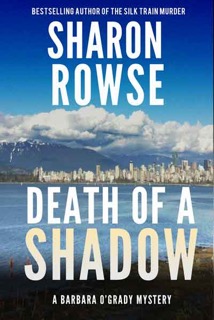
Sharon also writes contemporary P.I. novels that explore the dark side of the art world, the Barbara O’Grady series, which are also set in Vancouver. The fourth, and  most recent of those books, DEATH OF A SHADOW.

Learn more about Sharon’s work at: www.sharonrowse.com

Sharon’s topic is Writing Historical Mysteries, and it’s fascinating to read what she learned while researching Vancouver at the turn of the twentieth century.


I write two mystery series, one contemporary—the Barbara O’Grady series, and one historical—the Klondike Era mysteries. Why historical, you might ask. Isn’t that a lot of work, all that research? Well, yes. But I’ve always loved history, fictional and otherwise, and the way in which we understand our history fascinates me. In fact, one of my favourite books in university was a collection of six essays entitled What is History by E.H. Carr, which examined the cultural biases that historians bring to their work, and how it impacted their interpretation of history. History is usually written by the victors, after all.

When I sat down to write, I was drawn to the history of the West Coast, especially around Vancouver, Canada, where I live, since it was in many ways the last western frontier, and since much of its written history is very new—a couple of hundred years, at most. I was intrigued by how much was different from today—and how much was the same. I was also drawn to an era of great change—the end of the Victorian era and the beginning of the twentieth century.

One of the biggest elements in the growth of what are now major cities along the West Coast was the two to three year madness of the Klondike Gold Rush in the late 1890’s. Vancouver was a key departure point for would-be miners from around the world—a place to find supplies, transport and comrades for the gruelling journey to the gold fields. In a time of ever-increasing change, many of those men and women heading north to find their fortunes were leaving home to find a place where they could succeed, as much as they were looking for gold.

Usually you read stories about the men and women who came away from the Klondike Gold Rush with a fortune. I was intrigued by all those who didn’t—the ones who put everything they had into the effort, and came home broke. I spoke at length with a curator at the Klondike Museum in Skagway, Alaska. He told me about the journals of some of those miners who never found gold, and how many said the Klondike Gold Rush was the best thing that ever happened to them. The struggle itself was a transformative experience. Those words stayed with me.

All of this came together as I thought about writing a historical series. The hero, John Lansdowne Granville, is English, the fourth son of a minor aristocrat, who hasn’t found his place in late-Victorian society. After eighteen months on the creeks of the Klondike, he finds no gold, and winds up in Vancouver, hungry and broke.

As I research and write, I focus on what living in Vancouver was like then, and on the opportunities that might have existed for a man like Granville. What would he make of them? Vancouver was founded and settled by folks from elsewhere—though the Coast Salish were here long before the city was. I try to make the background and details for each book as historically accurate as possible, and to convey the feeling of the era.

I’m often struck by the differences a hundred or so years have made, as well as the things that haven’t changed. My challenge in writing these books is to convey the experience of that time through the eyes of my character, noting only the things they might have noted. All the while keeping each of my characters true to who they might have been, given their own cultural backgrounds and experiences. John Granville is very real to me, as is his friend Sam Scott and his incurably curious ladylove Emily Turner.

I continue to research while I’m writing, so I’ll often find information that will spark a new direction for the plot. In each book, however, my first inspiration is a piece of history that catches my imagination, and interests me enough to dig deeper. In the first book in the series, The Silk Train Murders it was the silk trains that raced across the continent carrying raw silk, which retailed for three-quarters of a million dollars per railcar, in 1899 dollars.

In The Lost Mine Murders, it was learning about a legendary lost mine near Pitt Lake, some 35 miles outside Vancouver, which has been searched for, and claimed lives, since the 1890’s. In The Missing Heir Murders, I was fascinated with the stories from many parts of BC about a long ago voyage of Buddhist monks from China who travelled down the West Coast from northern British Columbia to southern Mexico.

In my latest book, The Terminal City Murders, I was caught by the fact that banks were not allowed to provide mortgages until 1954. In 1900, all mortgage companies were private, and were often funded by British or American investment syndicates. Given the boom and bust nature and astronomical prices of the Vancouver housing market around this time—shades of 2015—it was a situation ripe for fraud. How could I resist?

I’m currently working on book five in the series, The Salmon Cannery Murders, and you can probably guess my inspiration for that one. I lived in Steveston, which was the hub of the salmon industry in 1900, for nearly a decade, before the last of the big canneries was torn down, and I think I absorbed the stories just by being there. It was finally time to write the book, which should be out early next year.

The funny thing is, my love of history seeps into my current day private eye series, too. Barbara’s cases often have roots in the past, and send her hunting for secrets that have lain hidden for many years as she races to solve a present-day problem.

CHECK OUT SHARON'S LATEST RELEASES, DEATH OF A SHADOW AND THE TERMINAL CITY MURDERS on Amazon!


Sunday, September 27, 2015

Introducing Guest Author: Judy Penz Sheluk

Over the past few weeks I’ve networked with many new people. One of the most dynamic, friendly, and helpful is Judy Penz Sheluk. Her debut mystery, THE HANGED MAN’S NOOSE was published July 2015 through Barking Rain Press. Her short crime fiction is included in The Whole She-Bang 2 and World Enough and Crime.
In her less mysterious pursuits, Judy works as a freelance writer/editor. She is currently Editor of Home BUILDER Magazine and Senior Editor, New England Antiques Journal.
Judy is a member of Sisters in Crime, Crime Writers of Canada, and International Thriller Writers. Find Judy at www.judypenzsheluk.com where she interviews other authors and blogs about the writing life.
I’ve posed some questions for Judy. You’ll find her answers insightful!

Tell us about your book

The Hanged Man’s Noose is the story of Emily Garland, a Toronto-based freelance writer who is offered a lucrative assignment in the small town of Lount’s Landing: find the real story behind a ruthless developer’s plans to convert an old schoolhouse on the town’s historic Main Street into a mega-box store. Recently dumped by her fiancĂ© and tired of reporting on the same old condo stats, she jumps at the opportunity to relocate and start anew. Adding to her motivation is the fact that she blames the developer for her mother’s recent suicide.

When Emily arrives in town, she quickly learns that not everyone is on board with the mega-box store, least of all Arabella Carpenter, the outspoken owner of the Glass Dolphin, an antiques shop on Main. But Arabella is not alone in her opposition. Before long, a vocal dissenter at a town hall meeting about the proposed project dies. A few days later, another body is discovered, and although both deaths are ruled accidental, Emily’s journalistic suspicions are aroused.

Putting her reporting skills to the ultimate test, Emily teams up with Arabella to discover the truth behind Stonehaven’s latest scheme before the murderer strikes again.
Describe an average writing day. Do you have any rituals and schedules?
I try to write every day, though it doesn’t always work out that way. My goal is 6,000 words a week, which gives me a first draft in three months. Once I have the draft completed, I leave it for a couple of weeks and start something else. After a couple of weeks, I’ll go back and change the color of the font on the entire document from black to blue. Then I start rereading it, editing chapter by chapter as I go, and changing the font color back to black when I’m satisfied that the chapter works. I’ll repeat that process once more, and then send the manuscript to a professional editor for their review. Then I’ll revise based on their input. After that final revision, I’ll send the book out into the world for publishing consideration.
As for rituals, I drink lots of tea (Warmth by Tetley, a cinnamon rooibos blend) and water. I also listen to talk radio while I write: either Newstalk 1010 or Talk 640 Toronto.
What are you working on right now?
I’m on the final revision of Skeletons in the Attic: A Marketville Mystery. It also takes place in small town (Marketville) but with the exception of Arabella Carpenter, who has a minor role, all the characters are different than in The Hanged Man’s Noose. I’m also planning the sequel to Noose, this time with Arabella as the protagonist and Emily along for the ride.
Read the first four chapters of The Hanged Man’s Noose free, and get a 35% off coupon HERE

Check out Judy's book on Amazon!


Sunday, April 26, 2015

Wearing All Those Hats

For me, writing has become not just a vocation but a business. It’s challenged me to adopt many different hats over the years. Writing is not just about reading, writing, editing, submitting, then repeating same. As you probably know, it’s about marketing, promoting, and building a brand, which isn’t always (and shouldn’t be) done from the comfort of home. It’s about getting out there and selling and making future plans and recordkeeping, and updating my website. It’s about continuous research for stories and research for new selling and marketing opportunities.

In the past eight days, here’s what I’ve done:

Finished editing my novella
Submitting novella and receiving contract (this was unusually fast--stay tuned for more news)
Giving a workshop last Saturday while preparing material for another workshop next Saturday
Selling books at a small literary festival yesterday
Networking on social media and in person
Updating website
Reviewing the contract
Writing and posting two book reviews, plus my weekly blog
Editing short story to take to critique group.
Jotting down notes for new stories.
Record keeping

And this is the stuff I remember. On top of a part-time day job, housework, cooking, and errands, it’s a busy life. Not every week is as crazy or as productive, or as exhilarating or exhausting. Sometimes those hats I wear become skewed or even topple to the ground. But I pick them up and start again. I’m a writer. That’s what I do. And I wouldn’t have it any other way.