Showing posts with label Second Wind Publishing. Show all posts

Thursday, May 01, 2014

Call for Submissions

rangelSecond Wind Publishing is accepting short stories, essays and poetry for its upcoming anthology, Wind Through an Open Door.

All submissions should deal with the question: what happens to us when we pass from this life? Remembrances of lost loved ones, personal experiences, profound recognitions of the afterlife (or its absence)—regardless of religious persuasion—are all welcome.

There is no cost to submit an entry. There is a maximum of 7000 words for essays or short stories. All entries must be submitted no later than June 10, 2014. Those whose work is included in the anthology will receive two contributor copies. Additional copies will be available for purchase, with contributors receiving a 60% discount. Submissions and questions should be sent to mike@secondwindpublishing.com.

Best of luck to everyone!

Wednesday, May 01, 2013

Pick a Flower and See What Ebook You Won!

Second Wind Publishing is celebrating May with a giveaway. Pick a flower and win a free ebook from Second Wind Publishing! Each number represents a Second Wind novel — even numbers for romance and chick lit; odd numbers for mystery, mainstream, and adventure. So, do you feel lucky? Go the the Second Wind blog (just click on the photo) and follow the directions. You won’t get a real flower, of course, since they are only virtual, but you will get a coupon for a free ebook in the format of your choice. (You need to post the number on the Second Wind blog, or else you won’t get your free ebook.)


Best of luck to you!

Offer ends May 15, 2013.

Monday, April 08, 2013

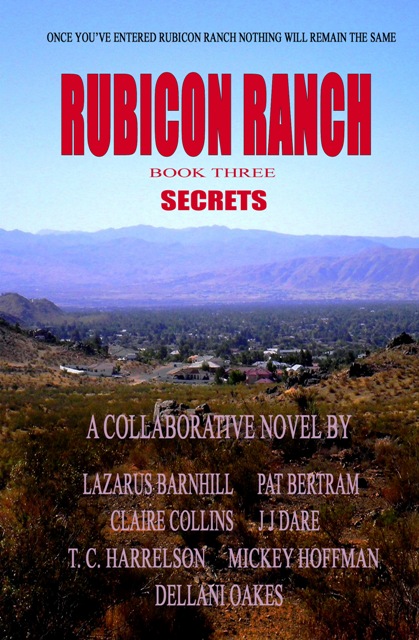
Rubicon Ranch: Secrets — The Story Begins!

Rubicon Ranch is a collaborative and innovative crime series set in the fictional desert community of Rubicon Ranch and is being written online by the authors of Second Wind Publishing. The very first chapter of the very first book (Rubicon Ranch: Riley’s Story) was posted on October 24, 2010, and we are still going strong! In fact, we are getting better and better. Seven authors, including me, are involved in the current story — Rubicon Ranch: Secrets, which is shaping up to be a psychological thriller.

The body of a local realtor is found beneath the wheels of a blow-up figure of a Santa on a motorcycle. The realtor took great delight in ferreting out secrets, and everyone in this upscale housing development is hiding something. Could she have discovered a secret someone would kill to protect? There will be suspects galore, including a psychic, a con man, a woman trying to set up an online call-girl service, and the philandering sheriff himself. Not only is the victim someone he had an affair with, but he will also have to contend with an ex-wife who has moved back in with him and a jilted lover, both with their own reasons for wanting the realtor dead.

Although some of the characters were introduced in Rubicon Ranch: Riley’s Story, the first collaboration in the series, and further developed in Rubicon Ranch: Necropieces, Rubicon Ranch: Secrets is a stand-alone novel, so don’t worry if you are new to Rubicon Ranch. A new chapter will be posted every Monday on the Rubicon Ranch blog. I’m posting the first chapter here, but if you don’t want to miss further chapters, please go to the blog and click on “sign me up” on the right sidebar to get notifications of new chapters.

We hope you will enjoy seeing the story develop as we write it. Let the mystery begin! Whodunit? No one knows, not even the writers, and we won’t know until the very end!

(If the Christmas theme seems unseasonal, well . . . considering how long it takes to write a book at the rate of a chapter a week, in a few months, the season will catch up to us!)

RRBookThreemidsize


Chapter 1: Melanie Gray
by Pat Bertram

Sunday, December 22; 7:05pm

Melanie Gray typed THE END, then sat back and studied the words on the computer screen. She’d found no satisfaction in telling the story of famed horror writer Morris Sinclair’s macabre life and death, and she felt no elation now that she’d finished the task. The evil man should have been buried in unhallowed ground and left to rot rather than be immortalized in a book, but she’d needed the money her publisher had offered. With the generous advance, she would be able to devote herself to finding out who killed her husband five months previously and, more importantly, why the murderer wanted Alexander dead. Morris had wooed death his whole life, so it was no surprise that death had come for him, but Alexander’s murder could not be so easily dismissed.

Tears stung Melanie’s eyes. She scrubbed the tears away, furious at herself for still grieving. She’d always considered herself a strong woman, up to any task, and yet she couldn’t write “the end” to her grief.

Damn you, Alexander! How could you do this to me?

She rose stiffly, stretched to get the worst of the kinks from her body, and tottered to the front closet for her coat. Except for a few hours of fitful sleep each night during the past nine weeks, she’d spent all her time at the computer, and she was sick of it. Sick of Morris Sinclair. Sick of death. Sick of Rubicon Ranch.

She opened the front door and blinked at the shadowy figures gliding through the darkness. Morris’s fans had descended on the neighborhood when news of his demise had hit the airwaves, and they had stayed when they learned that not all of Morris’s body pieces had been recovered. Dressed as vampires and zombies and ghouls of every imaginable—and unimaginable—ilk, they roamed the neighborhood and the nearby desert looking for necropieces in some sort of grisly treasure hunt.

Melanie hesitated, wondering at the wisdom of going out so late in the evening, but the twinkle of Christmas lights adorning a nearby desert willow made her set aside her caution.

Alexander had always loved Christmas, and no matter where in the world they happened to be living, he always managed to find a tree and decorate it. If Alexander still lived in her memory, he’d want her to wander through the neighborhood so he could see the lights.

Smiling at the whimsical thought, she locked the door behind her and strolled down the driveway to Delano Road. Even with half the houses lit up with holiday decorations, the neighborhood seemed dark. Too many people had left the area, temporarily abandoning their homes, though the flickering of candlelight through closed curtains hinted that squatters had taken up residence in some of the empty houses.

Melanie stood at the curb, trying to decide whether to go right or left. “It’s your fault, Alexander,” she murmured. “Until you died, I never had a problem making decisions.” But now, it didn’t make any difference whether she went north or south, whether she left Rubicon Ranch or stayed. Without Alexander, everything seemed uniformly bleak.

A house across the street all at once came ablaze with thousands of small white lights. Melanie cut across the road and headed for the brightness, wishing Alexander could see the decorations for real. Lights outlined the driveway, every bush, every rock, and dripped from the eaves like dazzling falls of lace.

She walked leisurely, savoring the radiant display on Alexander’s behalf, then hurried past the next dwelling, which was dark, and slowed again at the following house to look at the whimsical blow-up figure of Santa on a motorcycle.

After the brilliance of the lights at the first domicile, she had to wait a moment to let her eyes adjust to the relative dimness of this scene. And then she wished she hadn’t hung around to get a better look. Santa, with a wide grin and an upraised hand, seemed to be gleefully running over the prone body of a woman. A mannequin, it looked like.

Melanie drew in a sharp breath. Who would create such a morbid tableau for Christmas? But then, seeing a vampire with glowing teeth run past her, she sighed. Anyone in this insane neighborhood could have done it. After Morris Sinclair’s demise, Rubicon Ranch had become a bacchanalia of death, a celebration of the worst in humanity.

A car moved along the street behind her. The headlights illuminated the scene as clearly as if it were day, and suddenly something seemed wrong. So very wrong.

The woman being run over by the cheery Santa looked stiff in the way of death, not stiff like a mannequin.

Melanie told herself to continue on, to forget the gruesome sight and enjoy the rest of the decorations, but her leaden feet refused to do her bidding. Finally, wishing she were anywhere but here, she crept closer to the scene.

She caught a faint whiff of death—like meat just beginning to go bad—and her heart beat faster.

No. No. She’d had enough of death. Alexander. Poor kidnapped little Riley Peterson. Morris Sinclair. How could so much death be associated with a community as small as Rubicon Ranch?

Melanie bent over the body and touched a finger to the side of the woman’s neck to check for a pulse, though she already knew the truth.

She fumbled in her coat pocket for her cell phone and wondered if the sheriff would continue to believe in her innocence. Hell, she didn’t believe it herself. Maybe she was some sort of Typhoid Mary when it came to death. She’d been the one who found Riley Peterson’s body out in the desert, stuffed in a television console. She’d been the one to lead the sheriff to the desert where they’d found the body of Riley’s birth father. She’d been the first one to come across a necropiece—a dismembered foot—after Morris was killed. And now once again she had found death.

She punched in 999, but when the call didn’t connect, she realized she’d used the emergency number for Britain. She cleared the number, then punched 119. Crap. Wrong again. That was the emergency number for Mozambique. Where was she? She took a deep breath, and let it out slowly.

Rubicon Ranch. Rojo Duro County. Mojave Desert. California. USA. Ah, yes. 911.

Melanie made the call, gave the information to the dispatcher, then pulled her coat more firmly around her to protect her from the chill of the high desert winter night.

She’d expected to wait a half an hour or more until the sheriff or his deputies could make the thirty-mile trip from Rojo Duro, but only ten minutes had gone by when a dark SUV pulled up to the curb, and Deputy Kelvin Midget slid out from behind the wheel more nimbly than seemed possible for such a massive man.

The SUV didn’t have official county plates, so Melanie supposed the vehicle was the deputy’s private ride. She felt a spasm of guilt at cutting into the man’s personal time, but then she remembered what Deputy Midget had once told her—that he’d lost his wife to pancreatic cancer about three year and a half years ago, and had come out west to start over so he could heal. Maybe, like Melanie, he had no real life but was just going through the motions of living.

“What seems to be the trouble, Ms. Gray?”

Shivering, Melanie pointed to the body.

Midget picked his way through the xeriscaping, got down on his haunches to check the woman’s neck as Melanie had, then rose to his feet without using his hands to shove himself upright.

“Did you see what happened?”

“No. Just found her lying here is all. Checked her pulse. Called it in.”

Midget walked around to the other side of the body, scanning the ground, his dark brow furrowed. “Did you find her purse?”

“No, but I didn’t look for it.” Melanie wondered about the deputy’s concern for the woman. It seemed more than simply a law enforcement officer’s professional interest in a crime scene. “Did you know her?” she asked.

“Didn’t you?”

“I don’t think so. I don’t know many people in the neighborhood.”

“Seth—Sheriff Bryan—thinks you notice everything.”

“Well, the sheriff thinks a lot of things that aren’t true.”

Midget made a small sound that might have been a chuckle. “Hit a nerve, did I?”

More to get away from the uncomfortable topic of the Sheriff than because she wanted to identify the woman, Melanie circled the body so she could get a better look. The woman did appear familiar at that. Aquiline nose, close set eyes, coiffed hair, manicured fingernails with a shimmering design painted atop the polish, high heels, tailored business suit.

Melanie backed away from the body. “I think she might be a real estate agent. I’ve seen her around the neighborhood.”

“Nancy Garcetti,” Deputy Midget said. “She sold me my house. Poor woman. She was such a terrible judge of character. Looked at the superficial and assumed she knew what the person was about. Kept notes of everything. You sure you didn’t find her purse?”

“Maybe the person who murdered her took it.”

“What makes you think she was murdered?”

“What else could it be? Nancy got tired, so she decided to take a nap by the wheels of Santa’s motorcycle and froze to death?” Regretting her caustic tone, Melanie huddled deeper into her coat. Had she become so used to murder that all death seemed so unnatural? But death was unnatural. A deletion of life. A void.

“People die from many causes,” Deputy Midget said. “It’s possible she had a heart attack. A stroke. Some sort of accident. A mugging gone wrong. Could be anything. We won’t know until the ME gets here.”

A tan Navigator parked behind Midget’s SUV, and Lieutenant Rosaria Frio stepped out of the vehicle.

The lieutenant looked even more like an Hispanic Barbie doll than when Melanie first met her. No emotion showed on the law enforcement officer’s beautiful face, and the dim light made her skin look plastically perfect. Only the glitter of the lieutenant’s dark eyes and her easy stride confirmed her humanity.

She greeted Deputy Midget with a nod. “You got here fast.”

“I just bought a house here in Rubicon Ranch over on Adobe Pobre Court. I told you about it. Got an awesome deal from a couple who could hardly wait to get away from the area. They said there was too much crime.”

“Imagine that.” Lieutenant Frio turned to stare at Melanie. “And here is our one-woman crime spree herself. Or maybe cadaver dog would be a better description.”

Melanie returned the Lieutenant’s gaze, but refrained from answering in kind. Lieutenant Frio seemed to have taken her in dislike when they met after Riley’s murder and her manner had only grown colder with the passage of the months. Melanie didn’t entirely blame her. If their places were reversed, she’d probably be just as skeptical as the lieutenant about her penchant for finding corpses.

Lieutenant Frio walked to body and stood over it for a moment, then slanted a glance toward Melanie. “Sheriff Bryan will be here shortly. He and his wife were dining out, and he needs to take her home first.”

Melanie remained impassive. She already knew the sheriff and his wife were back together. Melanie had talked to him a couple of times to get details for her book, and he had told her his wife had decided the celebrity-ridden area might not be such a backwater after all. He’d sounded apologetic, but other than behavior that bordered on unprofessionalism, he had nothing to apologize for. They hadn’t had an affair, not even a fling. Just a little bit of flirtation and a lot of anger.

“Can I go?” she asked.

“I’ve questioned Ms. Gray,” Deputy Midget said. “If we need her again, we know where to find her.”

Lieutenant Frio turned her implacable gaze toward Melanie. “Don’t leave the county.”

If anyone else had deadpanned such a remark, Melanie would have assumed it was either a friendly suggestion or possibly a joke, but coming from the lieutenant, the command sounded like a jail cell slamming shut.

Melanie wanted to run back to her place, but she forced herself to walk since she was sure the lieutenant would see haste as a sign of guilt. She tried not to look at the houses she passed. The joyful decorations suddenly seemed obscene.

She didn’t believe Deputy Midget’s suggestion that Nancy had died of natural causes. The missing purse hinted that something grimmer was going on. What secrets Nancy had kept in her purse? Everyone in Rubicon Ranch seemed to have something to hide. And someone—perhaps someone in one of these very houses—might have a secret they would kill to protect.

***

Pat Bertram is the author of the suspense novels Light Bringer, More Deaths Than One, A Spark of Heavenly Fire, and Daughter Am I. Bertram is also the author of Grief: The Great Yearning, “an exquisite book, wrenching to read, and at the same time full of profound truths.” All Bertram’s books are published by Second Wind Publishing. Connect with Pat on Google+


Monday, February 04, 2013

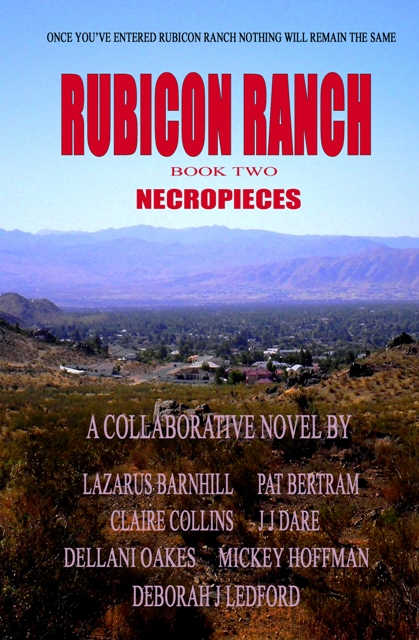
Rubicon Ranch: Necropieces -- The Story Continues

Rubicon Ranch is a collaborative and innovative crime serial set in the desert community of Rubicon Ranch and is being written online by the authors of Second Wind Publishing. Seven authors, including me, are involved in the current story — Rubicon Ranch: Necropieces.
 
Residents of Rubicon Ranch are finding body parts scattered all over the desert. Who was the victim and why did someone want him so very dead? Everyone in this upscale housing development is hiding something. Everyone has an agenda. Everyone’s life will be different after they have encountered the Rubicon. Rubicon Ranch, that is.

Although some of the characters were introduced in Rubicon Ranch: Riley’s Story, a previous collaboration, Rubicon Ranch: Necropieces is a stand-alone novel. A new chapter is posted every Monday.

We hope you will enjoy seeing the story develop as we write it. Whodunit? No one knows, not even the writers, and we won’t know until the very end!

Chapter 25: Melanie Gray
by Pat Bertram

Melanie paced her rented house, wandering through the great room to the bedroom, then up the stairs to her loft office to stare out the window. The clouds that had skirted Rubicon Ranch all day yesterday had settled over the town in the early morning hours. The rainstorm had now weakened to a soft drizzle, but floodwaters were swirling out of the desert and down the middle of the street like dirty bath water in search of a drain.

Melanie half expected to see body parts floating by, but it had been forty-eight hours since she had found the ravens breakfasting on the disembodied foot, so perhaps by now all the necropieces had been discovered. Shivering, she turned from the window, trudged down the steps to the great room and then into the bedroom. She’d spent most of the fifteen weeks since Alexander’s death roaming the desert, and she found it almost impossible to relax during this enforced incarceration. If she were any kind of photographer instead of an amateur shutterbug, she’d be out in the desert despite the rain, chronicling the way the runoff was recreating the desert floor, but her tiny camera wouldn’t stand up to the moisture, and then where would she be?

She plodded back through the great room and up the stairs again. Her cell phone rang, and for just a second, her spirits rose. Alexander! He was finally calling to tell her he was coming back. Just as abruptly, the realization that he was dead hit her like a physical blow, and tears spilled down her cheeks. Why couldn’t she remember that he would never come home? His body had been cremated and the ashes stored in a square brass urn sitting atop the dresser until she could take them high up into the Rocky Mountains in Colorado and scatter them.

By the time she reached her bedroom where she’d left her cell phone on the nightstand, the phone had stopped ringing. The tiny screen showed the number for her agent, and when the phone rang again, she considered not answering. What could the woman say that hadn’t been said a dozen times before? Melanie already knew her deadline had passed. She already knew she owed the publisher either the book or the return of the advance. She already knew . . . Oh, crap. It would be better to talk to Dottie and get it over with.

“Yes?” she said, hating the hesitancy she heard in her voice.

“Dahling!” Dottie chirped. “I’ve been calling and calling. Have I got good news for you! I’ve been talking to Jack, and he says you can have all the time you need to finish the desert book. He’ll even hire a photographer for you. And he’ll send you five hundred thousand dollars, though I’m sure I can get him up to a million.”

“What does he want from me? A kidney?” Jack Nolan, her publisher, had a reputation for wringing every last bit of creative effort from his authors while paying the least possible advance. He got away with it because, despite his miserly ways, he was scrupulously honest, remitting every penny of the royalties his authors earned.

Dottie chuckled. “So cynical, dahling. It’s perfect, really. You’re there. You know the people and the place. And from what I understand, you live next door to the Sinclairs.”

“No,” Melanie said, without a hint of uncertainty in her tone.

“You don’t live next door to them? My sources—”

“I mean, no. I will not write whatever book Jack wants me to write. I’m going to finish the desert book and then . . .”

“And then what? Knowing Alexander, he probably left you not only broke but also in debt. Someone is going to write the book about Morris Sinclair. It might as well be you.”

“Wait a minute,” Melanie said. “How do you know what’s going on here?”

Dottie laughed. “The whole world knows. It’s everywhere. On television, Facebook, Twitter. It’s such a delicious story. The author of the infamous ‘Necropieces’ series has himself become a series of necropieces. His fans don’t believe he’s permanently dead. They are holding vigils, waiting for him to come back to life. And his head was found in the house where that little girl died. Riley? Is that her name? The girl that was kidnapped as an infant and then killed by her biological father? How can you not want to write the story of Rubicon Ranch? It’s going to be huge. Humongous.”

“Not interested.”

“Wait! There’s more!” Dottie said. “You gotta love this stuff. One of the suspects in Morris’s murder is Tara Windsor.”

“Who?” Melanie asked.

“You had to be living out in the boonies somewhere not to have heard of Tara. Oh, right—you’ve been out of the country for the past umpteen years. Tara is an actress. She was in that movie with that actor, you know, the one with the gorgeous abs? No, I guess you don’t know. Anyway, it turns out the suspect isn’t Tara at all. Tara is in Cabo with her pool boy. Don’t you just love it?”

Melanie sank down onto the bed, suddenly weary. “No.”

“And then there’s you,” Dottie said slyly.

Melanie sat up straight. “Me? What about me?”

“The cops say you’re a suspect. You knew that, right? Jack says if you killed Morris and tell all the gory details, he’ll up your advance to two million.”

A suspect. Melanie had presumed the Sheriff’s insinuation that he considered her a suspect was his way of manipulating her and keeping her off balance, but if he or someone in the Sheriff’s department had given out her name, then she really had a problem. She heard the echo of herself screaming at Morris, “You leave me alone, Sinclair, or I’ll be shooting your dead body parts.” Could she have been more foolish?

“Do you know a good lawyer?” She gave a small laugh, wanting Dottie to think the question a joke, but fear clutched at her belly with clammy fingers. Maybe she’d have to write Morris’s story in order to pay for a defense attorney.

“You might not be a celebrity on a par with Morris or Tara,” Dottie said, “but you and Alexander have quite a following. Since there’s been mention of your involvement in Alexander’s death—”

“Who told you I was involved in Alexander’s death?” Melanie demanded.

“Just a guess.” Dottie voice sounded smug, as if she’d caught Melanie out in a secret. But there was no secret when it came to Alexander’s death. Just shoddy police work. “So many important deaths in such a small place make for a good story,” Dottie added.

“All the deaths are unrelated,” Melanie pointed out.

“Perhaps, but it’s more likely they are connected somehow. After all, Morris had autopsy photos of that little girl, and Alexander took some photos of necropieces for Morris.”

“You knew about that?”

“Alexander accidentally included a couple of the pictures when he sent Jack a batch of desert photos.”

Melanie sighed. “Maybe you’re right. Maybe Alexander’s death had something to do with Morris and the evil that this place seems to bring out in people.”

“So can I tell Jack you’ll write the book if he gives you an advance of a million dollars?”

“No. But you can tell him I’ll consider it.”

“Good girl. I’ll see what I can do about finding you a lawyer.”

Melanie set the phone on the nightstand, and put her head in her hands. Oh, Alexander. Look what you’ve done to me. She took a few deep breaths, determined not to cry, but when the tears spilled over anyway, she jumped to her feet, ran up the stairs, and plopped in front of the computer. Immersing herself in research always helped take her mind off herself, and she needed to know more about Morris before she could give Dottie her decision.

Typing “Morris Sinclair” into her search engine resulted in over two hundred million hits. Morris’s website. Book and movie sites. Thousands of fan sites and cult groups. Blogs. Articles. She narrowed her search to “Morris Sinclair biography” and managed to piece together the story of a highly narcissistic and anti-social man in his late sixties who had started out as a normal kid, turned into a troubled and rebellious teenager, and grew into a sadistic beast during his tour of duty in Vietnam.

After Vietnam, Morris married a woman he’d only known for a few weeks. He worked as a roughneck on an oilrig and wrote tales of terror on the side. When the stories were published, they found an immediate readership. He quit work to write fulltime.

Morris and his wife had three children, two boys and a girl. His wife committed suicide while the children were very young. Or perhaps Morris had killed her? That made more sense to Melanie—what mother would kill herself and leave her children to be raised by the devil incarnate?

Although the thought of a million dollars and the freedom it could buy tempted her, Melanie did not want to spend the next few months of her life immersed in the evil that was Morris. She was all set to call her agent and turn down the deal, when the doorbell rang.

She opened the door to find Lieutenant Frio and Deputy Midget standing on her doorstep, their faces set as if in stone.

“Ms. Gray,” Lieutenant Frio said, “we’d like for you to come with us. Sheriff Bryan wants to talk to you.”

Melanie held out her hands, wrists together, but Deputy Midget shook his head. “Sheriff Bryan says not to cuff you unless you give us trouble.”

“Can I get my coat?”

Lieutenant Frio threw Melanie a stern look. “You’re not going to try anything?”

“No.” Melanie darted into the bedroom, grabbed a trench coat from the closet and tucked her phone in the pocket.

Sandwiched between the two law officers, Melanie marched out to the tan Navigator parked at the curb in front of her house. Deputy Midget opened the back door of the vehicle, put a hand on her head to guide her through the opening as if she were a common criminal, then lowered himself into the front passenger seat. The right side of the Navigator sank, and the tires seemed to scream out for relief.

Lieutenant Frio peeled away from the curb. The tires sent up huge plumes of floodwaters that broke over the vehicle, and made it seem as if they were driving through a car wash.

Melanie stared out the window, though she couldn’t see anything but the backwash of water. If she strained her ears, she felt sure she could hear Alexander’s ghostly laughter. During all their years of living in countries with no civil liberties, they had never had a single problem with the authorities, and yet now, not even four months after his death, she found herself at odds with the law.

Maybe this arrest was just another of the sheriff’s games? She had never known what he wanted from her, though when they met after she’d found Riley’s body, he had focused his attention on her, and made her feel . . . seen. No one but Alexander had ever looked at her that closely, and even Alexander had stopped paying attention to her years before. Or maybe what had seemed like manipulation—the sheriff concentrating his attention on her and then ignoring her—had all been in her head, a widow’s cry to be noticed.

Once they hit the dry road of the highway, the thirty miles to Rojo Duro seemed to slip past in an instant. Deputy Midget ushered Melanie to a small room with two chairs and a metal table bolted to the floor, and left her alone.

A mirror on one wall had to be a one-way window, but Melanie put a finger against the glass to be sure. Finger touching finger without any space told her the truth—anyone could be watching her from the other side, and she would never know. She resisted the urge to stick out her tongue in a childish show of temper. Instead, she sat tall in a chair, hands folded on the table, and tried not to think of where she was. Tried not to think of her pathetic life. Tried not to think of her uncertain future.

Nine minutes later, Sheriff Bryan entered the room and locked the door behind him. He perched one hip on the table, and stared at her, no friendliness in his eyes.

After a long moment, he heaved a sigh and said, “Why did you do it, Melanie?”

***

Pat Bertram is the author of the suspense novels Light Bringer, More Deaths Than One, A Spark of Heavenly Fire, and Daughter Am I. Bertram is also the author of Grief: The Great Yearning, “an exquisite book, wrenching to read, and at the same time full of profound truths.” Connect with Pat on Google+

Monday, November 12, 2012

How long had the idea of your book been developing before you began to write the story?

Light Bringer, my most recent release from Second Wind Publishing, stewed in my brain pan for several years before I actually started to write it. It was the first book I conceived, but I couldn’t figure out who my alien characters were, where they were from, how they traveled here, and why they came, so when other stories captured my imagination, I followed my enthusiasm. In between finishing my various novels, I worked on Light Bringer, trying to develop the idea and research the specifics. If you include my research, which I’d been doing for decades before the story ever entered my mind, you could say the idea for the book had been developing for about thirty years.

Here are some other authors’ responses to the question of how long the idea had been developing before beginning to write their stories. The comments are taken from interviews posted at Pat Bertram Introduces . . .

From an interview with Jerold Last, Author of “The Ambivalent Corpse”

book. In this case “a while” spanned 12 years. The major challenges for me are finding the time to write and the discipline to edit the dialogue and descriptive passages over and over until things feel right and pass my wife’s critical evaluation. I haven’t needed to spend much time on research as yet, since I’ve lived in the locations that the books have been set in.

From an interview with Guy Harrison, author of “Agents of Change”
For over a year, if you can believe it. I originally wrote Agents of Change as a television pilot script around this time last year. As an aspiring screenwriter for many years, I finally got tired of banging my head against the wall as I attempted to sell the script.
This past October, I finally asked myself “what if I wrote a novel?” I really believed in the television pilot’s concept but knew I needed to rework it for the purposes of a book. It’s darker than the television series would have been. Truth be told, I actually like it a lot better as a novel.

From an interview with Dale Cozort, Author of “Exchange”

For this particular book, almost twenty years. I know that because I came across a notebook with dated entries from when I was in my late teens outlining some of the ideas. That’s unusual for me. Most of my stories go from concept to writing within a year or two. I had the idea for Exchange long before I had the maturity or self-discipline to write it.

From an interview with Stephen Prosapio, Author of “Ghosts of Rosewood Asylum”

Funny in that this story had to “brew” quite a while, Pat. I thought up the rough idea for GHOSTS OF ROSEWOOD ASYLUM after my first novel DREAM WAR didn’t sell to the Big Six publishers. I didn’t quite pitch it right to my agent though, and she suggested I go with another idea I had at the time (a vampire novel). Unfortunately, I got blocked with that idea and came back to the TV Paranormal Investigator angle. Pitching it a second time to my agent went much better. She gave me some great advice. Thus, GHOSTS OF ROSEWOOD ASYLUM (GoRA) was the easiest novel to write thus far. I wrote the first draft within 3 months.

From an interview with Ellis Vidler, Author of “Cold Comfort”

Cold Comfort took about a year to write and five more to revise till I felt it was right. The first one, Haunting Refrain, took eight years to complete. I’m getting better.

From an interview with Joylene Nowell Butler, Author of “Broken but not Dead”

Too long. Someone asked me the other day about my mother and it occurred to me then that the day she died I’d written the first four pages of “Broken but not Dead”. I gave them to her to read, then retired for the night. When I got up the next morning the pages were on the dining room table with spelling corrections and a note that said she liked it very much. I didn’t realize then that she’d passed. That was October 16, 1999. It takes me a long time to write, and I don’t think it’s because I’m slow. I work on so many different projects at the same time and I like to take breaks and distance myself often.

So, How long had the idea of your book been developing before you began to write the story?

(If you’d like me to interview you, please check out my author questionnaire http://patbertram.wordpress.com/author-questionnaire/ and follow the instruction.)

Monday, October 01, 2012

Novel Writing Tips and Techniques From Authors of Second Wind Publishing

Novel Writing Tips and Techniques from Authors of Second Wind Publishing is the 100th book published by Second Wind. I am thrilled to be a part of this extraordinary project.
 
"As someone who constantly evaluates novels for publication, I was astonished at the breadth and clarity of the wonderful advice contained in this handbook. It addresses concerns as grand as plot development and as simple but essential as formatting your submission. It offers crucial advice on literary topics ranging from character development to the description of action. Virtually every subject that is of great concern to publishers — and therefore to authors — is covered in this clear, humorous and enormously useful guide." --Mike Simpson, Chief Editor of Second Wind Publishing

Table of Contents

A Publisher's Top and Bottom Five: What We're Looking For vs. What We're Watching For by Mike Simpson
On Becoming an Author by Susan Surman
Finding Time to Write & Overcoming Writer’s Block by Mairead Walpole
Creating Incredible but Credible Characters by Pat Bertram
How to Begin and End a Story by Lazarus Barnhill
Plot Twists: Three Little Questions by Norm Brown
Points of View by Juliet Waldron
Moving Smoothly: Transitioning in Writing by Jan Linton (JJ Dare)
Captivating Settings by Deborah J Ledford
Foreshadowing by Nancy A Niles
Timing by Claire Collins
Don’t Keep Me Dangling by Sherrie Hansen
Sex SCENES not SEX Scenes by Pat Bertram
Film as Literary Influence on the Novel: How to Approach Scenes by Eric Wasserman
How Much Narrative is Too Much by J. Conrad Guest
A Jerk’s Guide to Comedy Writing by Noah Baird
The Challenges and Joys of Writing a Novel Series by Christine Husom
Creating a Believable Science-Fiction Environment by Dellani Oakes
Write it Right by Dellani Oakes
The Importance of Formatting by Deborah J Ledford
Writing Aids and Organizational Tools by Coco Ihle

Novel Writing Tips and Techniques is available from Second Wind Publishing, Amazon (Print & Kindle), Barnes and Noble (Nook), Smashwords (all ebook formats including palm devices)

Click here to Help Us Celebrate the Publication of Our 100th Book!!

Friday, September 07, 2012

Visit My Books at the Bookmarks Festival of Books in Winston Salem!

My publisher, Second Wind Publishing, will be at the Bookmarks Festival of Books on Saturday, Sept. 8 from 10 a.m.-5 p.m. in the Downtown Arts District in Winston-Salem, centering on Trade and Sixth Streets. If you are going to the festival, stop by their booth and check out tthe books. They will be showcasing a variety of Second Wind titles, including perennial reader favorites, the newest releases, and best of all --- my books! Alas, I won't be there to talk to you, but my books say everything I want to say.

Light Bringer: Thirty-seven years after being abandoned on the doorstep of a remote cabin in Colorado, Becka Johnson has returned  to discover her identity, but she only finds more questions. Who has been looking for her all those years? Why are those same people interested in fellow newcomer Philip Hansen? Who is Philip, and why does her body sing in harmony with his? And what do either of them have to do with a shadow corporation that once operated a secret underground installation in the area?

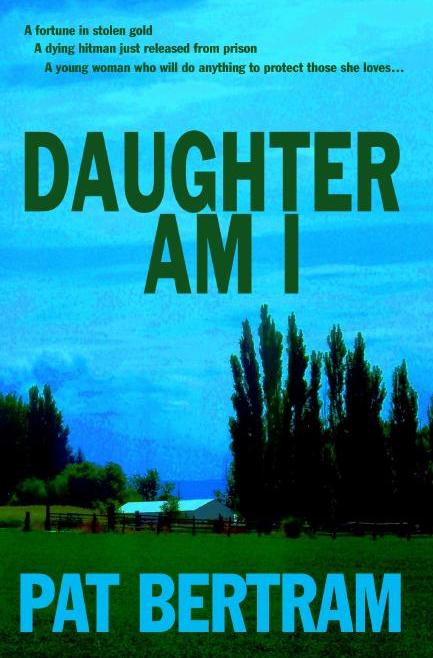
DAIDaughter Am I: When twenty-five-year-old Mary Stuart learns she inherited a farm from her recently murdered grandparents — grandparents her father claimed had died before she was born — she becomes obsessed with finding out who they were and why someone wanted them dead. She meets and falls in love Tim Olson, whose grandfather shared a deadly secret with her great-grandfather. Now Mary and Tim need to stay one step ahead of the killer who is desperate to dig up that secret.

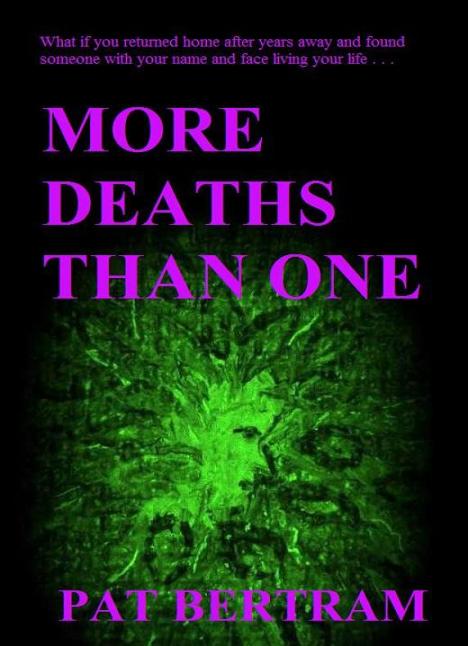
More Deaths Than One: Bob Stark returns to Denver after 18 years in Southeast Asia to discover that the mother he buried before he left is dead again. He attends her new funeral and sees . . . himself. Is his other self a hoaxer, or is something more sinister going on? And why are two men who appear to be government agents hunting for him? With the help of Kerry Casillas, a baffling young woman Bob meets in a coffee shop, he uncovers the unimaginable truth.

A Spark of Heavenly Fire: In quarantined Colorado, where hundreds of thousands of people are dying from an unstoppable disease called the red death, insomniac Kate Cummings struggles to find the courage to live and to love. Investigative reporter Greg Pullman, is determined to discover who unleashed the deadly organism and why they did it, until the cost — Kate’s life — becomes more than he can pay.

Monday, August 06, 2012

Rubicon Ranch: Necropieces -- The Story Continues

Rubicon Ranch is a collaborative and innovative crime series set in the desert community of Rubicon Ranch and is being written online by the authors of Second Wind Publishing. Seven authors, including me, are involved in the current story — Rubicon Ranch: Necropieces.

Residents of Rubicon Ranch are finding body parts scattered all over the desert. Who was the victim and why did someone want him so very dead? Everyone in this upscale housing development is hiding something. Everyone has an agenda.

Everyone’s life will be different after they have encountered the Rubicon. Rubicon Ranch, that is.

Although some of the characters were introduced in Rubicon Ranch: Riley’s Story, a previous collaboration, Rubicon Ranch: Necropieces is a stand-alone novel.

We hope you will enjoy seeing the story develop as we write it. Let the mystery begin! Whodunit? No one knows, not even the writers, and we won’t know until the very end!

Chapter 9: Melanie Gray
by Pat Bertram

Melanie locked the front door of the house and turned around to face the day. It was clear and warm with a platinum sun shining in an azure sky. She felt her spirits rise. With such lovely weather, things couldn’t be as bad as they seemed. She marched down the driveway, and her spirits plummeted as fast as they had risen. The sheriff’s tan Navigator, like a brooding predator, loomed in the driveway of the Sinclair house next door.

Melanie had tried to forget Sheriff Seth Bryan and the conflicted feelings he had aroused in her, but apparently she hadn’t succeeded. She could feel the emotions rushing back to fill the emptiness inside her. She still couldn’t tell if she’d felt more drawn to him or more repelled by him. With any luck, she’d never have to explore those feelings. As soon as he finished his business and left the area, she could forget him again.

She heard the sound of his voice, though not his words, and for a moment she considered dashing back into the house to avoid any encounter with him, but then she realized the truth. The sheriff had no interest in her. It had been almost three months since she’d last seen him, and in all that time, he had made no effort to contact her.

She lifted her chin. She didn’t need him or any man. They were all worthless creatures who had no regard for anyone but themselves.

Still, it wouldn’t hurt to see what he was up to.

She took a few steps forward so she could see the front door of the Sinclair house. The sheriff looked the same as he always had. Jeans and a white shirt with a badge on the shoulder clothed his lean, flat-bellied body, and a navy blue ball cap with a yellow “Sheriff” embroidered on it covered most of his dark brown hair. And he still wore those ridiculous mirrored sunglasses.

The sheriff and Moody seemed to be standing closer together than politeness dictated. Could something be going on between the two of them? Movement in the passenger seat of the Navigator caught her attention. Deputy Midget. If the sheriff intended anything shady, surely he wouldn’t bring a deputy along to witness his behavior? Then this must be an official visit.

Moody looked okay — happy, even. It had been very quiet the last week or so without “The Sounds of Silence” blaring at all hours, and she’d probably been enjoying herself in Morris’s absence.
The sheriff starting walking toward his vehicle. Melanie squatted to retie a shoelace, hoping he wouldn’t catch sight of her. She might have the courage not to seek refuge in the house, but she had nothing to say to him.

When she heard the sheriff’s Navigator slowly moving down the street, she squelched a pang of disappointment. As annoying as his attentions were, at least they had reminded her she was alive.
She’d been living with the dead — or rather memories of the dead—for way too long.

She arose with only the slight aid of one hand to push her erect, and angled her steps to the right of her driveway, intending to head up Delano Road to the desert. She paused, took two steps to the left.

The Daily Indecision is how she’d come to think of this inability to act. “Sounds like a newspaper,” she said aloud. “They’d print both sides of every story since the editor would be unable to decide which view to stand behind. Or maybe the paper would be blank because they’d never be able to decide which stories were newsworthy. And since when do you talk to yourself?”

Since Alexander died. She often wandered in the desert, trying to understand her husband’s death and her grief, and she’d gotten in the habit of talking aloud to him, hoping he could help make sense of her chaotic thoughts. He never responded. But then, he’d seldom replied even before he died.

When had their relationship become all about him? And why hadn’t she noticed the change? She sighed. Probably because she’d spent so much time online doing research for the coffee table books she and Alexander wrote. Well, she wrote. He took the photos. After his death, she discovered he’d somehow squandered the advance for the book about the Mojave Desert they’d contracted for, so now she needed to take the photographs in addition to writing the text. She thought she’d become good at shooting photos, but just this morning she’d received an email from her publisher:
“Some of your photos are usable, but most are uninspired. You take photographs, but the great photographers, like Alexander, make photographs. And when they make photographs, they make love. We feel the empathy between the external and internal events.”

Whatever that meant.

“What it means,” she said aloud, “is that you have work to do.” She took five resolute steps up Delano Road, then stopped. She could see Eloy Franklin hunched on his porch like a land-locked amphibian, watching everything that went on in his vicinity.

After all the turmoil the neighborhood had gone through recently, after all the deaths, she thought that things would have changed, but there Eloy sat, as unapproachable and forbidding as always. She’d smiled at him a couple of times when she passed in front of his house, but he’d never acknowledged her efforts at friendliness by so much as a nod.

Unable to stand the thought of Eloy’s scrutiny, she turned left. The sheriff’s navigator hadn’t gotten far, only a few houses away. The vehicle still moved slowly, as if the sheriff were looking for something. Trying to see the neighborhood through his eyes, Melanie peered down Delano Road. A petit woman held a camera to her face, either taking photographs or hiding behind it. Did Sheriff Bryan think the woman was Melanie? Melanie smiled to herself. Whatever faults the man might have, mistaking one woman for another was not one of them. Melanie had seen the woman several times before; she was shorter, prettier, and younger than Melanie, and had the clear luminous complexion of someone with a mixed race heritage.

Beyond the woman, a skinny man lurched along the side of the road. Melanie had also seen him several times before, and he worried her. Anger seemed to crackle around him, like lightning right before it strikes.

The Navigator’s siren blared, and the vehicle shot down the street and tore around the corner onto Tehachapi Road, heading east.

A dark cloud seemed to lift from the neighborhood, and Melanie’s indecision disappeared. She turned right, past Moody’s house, past the strange no-man’s land that separated the Sinclair land from the Franklin land, past Eloy’s house.

The wilderness beckoned.
* * *

Melanie stood at the crest of knoll and surveyed the expanse of desert. Somewhere out there, midst the creosote bushes and cacti, a photograph she could make waited for her — an image so compelling, viewers would immediately sense her empathy with the subject.

But how did one get emotionally connected to something as vast and as alien as the Mojave Desert? Then she remembered Alexander saying he looked for a significant detail. By focusing on a single feature, by making it the heart of the photo, the rest of the scene came into focus.

Crap. I’ll never get the hang of photography. Damn you, Alexander, for putting me through this.
She heard a sound closing in on her from behind, a leisurely whup . . . whup . . . whup. She turned and froze, transfixed by the raven gliding by. It flew so close she could see the brown pupil of its bright black eye and the purple and blue sheen of its feathers. She’d never seen such a huge bird—the body looked bigger than a cat, and its wings spanned at least three feet, maybe four. For a moment, it seemed to hang motionless, then a graceful wing beat stirred the air and propelled it forward.

Melanie fumbled with her camera, almost in tears. She’d had a perfect opportunity to make a photograph, but she’d become so lost in the moment, she’d forgotten all about taking a picture. Alexander wouldn’t have forgotten. His camera had been an extension of his hands, his eyes. He never let anything get between him and an image he wanted to capture. Not even Melanie. Especially not Melanie.

Then she heard it behind her again, the whup . . . whup of wing beats. And this time she held her camera ready. As the second raven passed her, she caught the image. Joy burst inside her.

I did it!

Only then did it strike her as odd that the two ravens had been so focused on their goal that they hadn’t seemed to notice how close they’d been to her.

The first raven had already disappeared, but she watched the second one descend behind a rocky outcrop thirty feet away.

She followed a barely perceptible track through the scrub to where six or seven ravens pecked at what looked to be the carcass of a small animal. A rabbit, maybe. Thinking how wonderfully the image of this raw savagery would contrast with the majesty of the flying raven photo, she crept closer. And gagged.

The ravens weren’t feeding on a rabbit, but something oddly familiar and totally out of place.
* * *

Melanie waited for Sheriff Bryan and Deputy Midget to pick their way up the rock-strewn path to the top of the hill. The sun glinted off the sheriff’s mirrored sunglasses, making him appear soulless.

When he drew near, Sheriff Bryan grunted. “I wish you’d stop finding bodies in such out of the way locations.”

“I didn’t find a body. I found . . .” She swept out a hand, showing the track and which direction he should travel.

The sheriff furrowed his brow at her, then followed the track. Deputy Midget trailed after him. Melanie brought up the rear.

Sheriff Bryan stopped by the outcropping. “A boot? You called me here to see crows playing with an old bloody boot? You must really be desperate to talk to me.”

“Desperate?” Melanie stared at him, the heat of anger flushing through her body. “Are you really so self-absorbed that you think I called you here on a pretext? I didn’t call you. I called dispatch and told them exactly what I found. It’s not a pretext, and they’re not crows. They are ravens.”

The sheriff and his deputy exchanged shrugs, then proceeded forward. The ravens squawked, rose as one, and circled above them, as if protecting their treasure.

Sheriff Bryan squatted, then whipped his head around, lips drawn back in a rictus, and faced Melanie. “A foot? That’s what you found, a foot?”

Midget took a step back. “It looks like something out of Morris Sinclair’s books.”

“Necropieces,” Bryan said, turning back to the foot.

“So where’s the body?” Midget asked.

“Maybe there isn’t one. Someone could have been illegally dumping medical waste.” Bryan rose and loomed over Melanie. “What do you know about this?”

She studied him for a moment, wondering what was going on behind those sunglasses. “Are you accusing me of something?”

The sheriff cocked his head like a raven getting ready to peck at its prey. “The person who calls in a report is always suspect.”

Monday, June 04, 2012

The Story Behind Rubicon Ranch

Almost two years ago, I got the idea to write a collaborative novel online. I broached Second Wind Publishing authors with the concept, and I found eight other writers willing to participate in the experiment. It took a few months to hammer out the details, which seemed an endless task back then, but now I see as incredibly swift. The story was, after all, a committee production.

We started out with what we considered the most heinous of crimes --- the death of a little girl. In the first chapter: Chapter 1: Melanie Gray — by Pat Bertram, which was posted on October 24, 2010, Melanie found the girl’s body stuffed in an abandoned television console when she was wandering in the desert, trying to come to terms with the death of her husband. Poor Melanie. So much death!

Each author created a character who might have a reason to kill little Riley. And each character was hiding something.

Could Kourtney and Jeff Peterson have killed their daughter, mischievous nine-year-old Riley, to protect their secret?

Moody Sinclair had once killed an eight-year-old boy. Has she killed again?

Fifteen-year-old Dylan McKenzie is a straight A honor student. By day. Did Riley discover the other Dylan, the one who prowls at night?

Cooper Dahlsing does strange things while sleepwalking. Could he have killed and not known it?

Mark and Jamie Westbrook, self-styled private investigators, show up to help solve the murder, but perhaps they had a hand in creating the crime?

Eighty-two-year-old Eloy Franklin sits on his porch and watches. But does he do more than watch?

Forty-three-year-old Melanie Gray found Riley’s body stuffed in a television console that had been dumped in the desert. But is she as innocent as she seems?

Sheriff Seth Bryan is bitter and cynical at having lost everything he values. Is he manufacturing crimes to bring him the notoriety he craves?

So many villainous characters! And until the very end, no one knew who committed the dastardly deed, not even the writers.

The novel was supposed to be a promotion stunt, but halfway through, it got derailed by life. One author had to deal with colon cancer, including three debilitating operations. Another author had to deal with a flooded house that was uninhabitable for six months. Still other authors had to deal with grief after the loss of significant people in their lives or heavy job pressures. When we started in again, we’d lost all our readers, so there was no longer any promotional value, but still we persevered.

And now the book is finished. You can read the entire novel online for free. If you prefer to read the book on an ereading device, Rubicon Ranch: Riley’s Story is available as a Kindle or in the ebook format of your choice from Smashwords. It’s also available in print from Amazon and Second Wind Publishing.

But . . .

That is not the end of Rubicon Ranch! Though some of the authors went on to other projects, enough wanted to continue the Rubicon Ranch saga, so we lassoed a few additional authors into creating characters.

And now we have a new story.

Three months after finding the body of the little girl, poor Melanie is again wandering in the desert, still having a hard time dealing with her husband’s death, when she sees a congress of ravens pecking at a dismembered foot. Who was the victim and why did someone want him so very dead? Everyone in this upscale housing development is hiding something. Everyone has an agenda. Everyone’s life will be different after they have encountered the Rubicon. Rubicon Ranch, that is.

Although some of the characters from the previous collaboration are featured in the new story, Rubicon Ranch: Necropieces is a stand-alone novel. The first chapter will be posted Monday, June 11, 2012 on the Rubicon Ranch blog, and a new chapter will be posted every Monday after that.

I hope you will join us in this new serial adventure. It should be a devious tale.
Map of Rubicon Ranch.
A) Melanie Gray
B) Moody Sinclair
C) Eloy Franklin
D) Leia Menendez
E) Ward Preminger
F) Egypt Hayes
G) the Peterson house
***
Pat Bertram is the author of Light Bringer, More Deaths Than One, A Spark of Heavenly Fire, and Daughter Am I. All Bertram’s books are available both in print and in ebook format. You can get them online at Second Wind Publishing, Amazon, B&N and Smashwords. At Smashwords, the books are available in all ebook formats including palm reading devices, and you can download the first 20-30% free!