Showing posts with label historical mysteries. Show all posts

Sunday, November 08, 2015

Introducing Guest Blogger: Kat Flannery

I’m very happy to introduce Kat Flannery, a dynamic, versatile author with plenty of wisdom to share. I’ve already learned a lot about hosting launch parties and the importance of blogging from her.

Kat’s bio states that her love of history shows in her novels. She is an avid reader of historical, suspense, paranormal, and romance.  A member of many writing groups, Kat enjoys promoting other authors on her blog. She’s been published in numerous periodicals throughout her career. Her debut novel CHASING CLOVERS has been an Amazon bestseller many times. LAKOTA HONOR and BLOOD CURSE (Branded Trilogy) are Kat’s two award-winning novels and HAZARDOUS UNIONS is Kat’s first novella. Kat is currently hard at work on her next book.

Today, Kat offers some great tips on writing novellas. Enjoy!

I love to write novellas. They give me a refreshing break from the heavy plotting I do for my full-length novels. However, just like anything we write there is an invisible guideline when it comes to hammering out a novella, and I’ve shared mine below.

Five Tips You Need to Know When Writing a Novella.

1.      Start your conflict in the first sentence. Unlike a novel where you build toward your main plot. Your goal is to bring the reader into the action from the first sentence and take it from there. This will set you up to keep the novel going at a fast pace, and keep your reader engaged.

2.      Fewer Characters. You do not have the word count to bring in a broad range of characters. Stick to the main ones with a few minor. This enables you to develop your characters providing your reader with three-dimensional personalities they will love.

3.      Your novella should not span more than a week; in fact I’d say five days max. This is a quick telling of a story and if you spread it out over weeks, like you could with a novel, you will lose your reader do to an unbelievable timeframe. Get in and get out is how I like to describe the novella writing process.

4.      Stick to one plot, and if you have to one subplot. I don’t advise more than that. You haven’t the time to flush out subplots when choosing to write a novella. Your plot is the driving force of the novella, trying to incorporate subplots could pull the reader from the story if not done right. A novella should be read in a day, thus a reminder of how fast the pacing needs to be for your story. Snap…snap…snap…keep the rhythm going. Do not put in filler. There is no room in a novella for useless wording.

5.      Word count. Novellas range from 15000 – 40000 words. This can be difficult for those writers who are used to pounding away at an 80,000-word novel. Writing something with fewer words will challenge your creativity and editing skills. Remember keep it crisp, quick and strong.


On SALE for $1.99

Twin sisters separated by war, bound by love…

After the death of their father, twin sisters Maggie and Matty Becker are forced to take positions with officers’ families at a nearby fort. When the southern states secede, the twins are separated, and they find themselves on opposite sides of America’s bloodiest war.

In the south, Maggie travels with the Hamilton’s to Bellevue, a plantation in west Tennessee. When Major Hamilton is captured, it is up to Maggie to hold things together and deal with the Union cavalry troop that winters at Bellevue. Racism, politics and a matchmaking stepmother test Maggie’s resourcefulness as she fights for Bellevue, a wounded Confederate officer and the affections of the Union commander.

In the north, Matty discovers an incriminating letter in General Worthington’s office, and soon she is on the run. With no one to turn to for help, she drugs the wealthy Colonel Cole Black and marries him, in hopes of getting the letter to his father, the governor of Michigan. But Cole is not happy about being married, and Matty’s life becomes all about survival.

Two unforgettable stories of courage, strength and honor.


Can one woman heal the heart of a lawman?

A gardener who uses plants to heal, Fern Montgomery is an outcast who refuses to be pushed out of town. When her friend is murdered and all fingers point to Fern as the only suspect, she must find a way to prove her innocence while fighting off unwanted feelings for the sheriff.

Sheriff Gabe Bennett has his mind set on arresting Sarah Fuller’s killer. But his key suspect isn’t what he expected. He soon realizes there is more to the quiet gardener than he’d first anticipated. As passion blooms, Gabe is forced to face his feelings—and the woman who has stolen his heart.

Kat’s books are available at:

You can find Kat here:


Sunday, October 04, 2015

Introducing Guest Blogger: Sharon Rowse

It’s my great pleasure to introduce BC mystery author Sharon Rowse, who I’ve known since her first historical mystery, The Silk Train Murders was nominated for an Arthur Ellis award.

Author of eight books in two series, former human resources expert Sharon now spends her days writing and researching. Her love of history combines with her knowledge of human behaviour in books that seek out unique, forgotten bits of history, melding them with memorable characters in the mysteries she writes.

Sharon’s work has been praised as “impressive” (Booklist), “delicious” (Mystery Scene) and “well-researched and lively” (Seattle Times).

Sharon’s most recent work is the historical mystery THE TERMINAL CITY MURDERS, the fourth in a series, which is set in early 20th CenturyVancouver. The first novel in the historical series, THE SILK TRAIN MURDER, was a Crime Writer’s of Canada Best First Novel Award nominee.

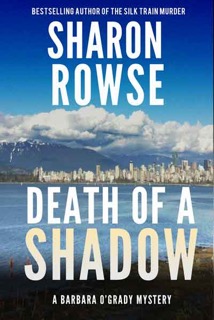
Sharon also writes contemporary P.I. novels that explore the dark side of the art world, the Barbara O’Grady series, which are also set in Vancouver. The fourth, and  most recent of those books, DEATH OF A SHADOW.

Learn more about Sharon’s work at: www.sharonrowse.com

Sharon’s topic is Writing Historical Mysteries, and it’s fascinating to read what she learned while researching Vancouver at the turn of the twentieth century.


I write two mystery series, one contemporary—the Barbara O’Grady series, and one historical—the Klondike Era mysteries. Why historical, you might ask. Isn’t that a lot of work, all that research? Well, yes. But I’ve always loved history, fictional and otherwise, and the way in which we understand our history fascinates me. In fact, one of my favourite books in university was a collection of six essays entitled What is History by E.H. Carr, which examined the cultural biases that historians bring to their work, and how it impacted their interpretation of history. History is usually written by the victors, after all.

When I sat down to write, I was drawn to the history of the West Coast, especially around Vancouver, Canada, where I live, since it was in many ways the last western frontier, and since much of its written history is very new—a couple of hundred years, at most. I was intrigued by how much was different from today—and how much was the same. I was also drawn to an era of great change—the end of the Victorian era and the beginning of the twentieth century.

One of the biggest elements in the growth of what are now major cities along the West Coast was the two to three year madness of the Klondike Gold Rush in the late 1890’s. Vancouver was a key departure point for would-be miners from around the world—a place to find supplies, transport and comrades for the gruelling journey to the gold fields. In a time of ever-increasing change, many of those men and women heading north to find their fortunes were leaving home to find a place where they could succeed, as much as they were looking for gold.

Usually you read stories about the men and women who came away from the Klondike Gold Rush with a fortune. I was intrigued by all those who didn’t—the ones who put everything they had into the effort, and came home broke. I spoke at length with a curator at the Klondike Museum in Skagway, Alaska. He told me about the journals of some of those miners who never found gold, and how many said the Klondike Gold Rush was the best thing that ever happened to them. The struggle itself was a transformative experience. Those words stayed with me.

All of this came together as I thought about writing a historical series. The hero, John Lansdowne Granville, is English, the fourth son of a minor aristocrat, who hasn’t found his place in late-Victorian society. After eighteen months on the creeks of the Klondike, he finds no gold, and winds up in Vancouver, hungry and broke.

As I research and write, I focus on what living in Vancouver was like then, and on the opportunities that might have existed for a man like Granville. What would he make of them? Vancouver was founded and settled by folks from elsewhere—though the Coast Salish were here long before the city was. I try to make the background and details for each book as historically accurate as possible, and to convey the feeling of the era.

I’m often struck by the differences a hundred or so years have made, as well as the things that haven’t changed. My challenge in writing these books is to convey the experience of that time through the eyes of my character, noting only the things they might have noted. All the while keeping each of my characters true to who they might have been, given their own cultural backgrounds and experiences. John Granville is very real to me, as is his friend Sam Scott and his incurably curious ladylove Emily Turner.

I continue to research while I’m writing, so I’ll often find information that will spark a new direction for the plot. In each book, however, my first inspiration is a piece of history that catches my imagination, and interests me enough to dig deeper. In the first book in the series, The Silk Train Murders it was the silk trains that raced across the continent carrying raw silk, which retailed for three-quarters of a million dollars per railcar, in 1899 dollars.

In The Lost Mine Murders, it was learning about a legendary lost mine near Pitt Lake, some 35 miles outside Vancouver, which has been searched for, and claimed lives, since the 1890’s. In The Missing Heir Murders, I was fascinated with the stories from many parts of BC about a long ago voyage of Buddhist monks from China who travelled down the West Coast from northern British Columbia to southern Mexico.

In my latest book, The Terminal City Murders, I was caught by the fact that banks were not allowed to provide mortgages until 1954. In 1900, all mortgage companies were private, and were often funded by British or American investment syndicates. Given the boom and bust nature and astronomical prices of the Vancouver housing market around this time—shades of 2015—it was a situation ripe for fraud. How could I resist?

I’m currently working on book five in the series, The Salmon Cannery Murders, and you can probably guess my inspiration for that one. I lived in Steveston, which was the hub of the salmon industry in 1900, for nearly a decade, before the last of the big canneries was torn down, and I think I absorbed the stories just by being there. It was finally time to write the book, which should be out early next year.

The funny thing is, my love of history seeps into my current day private eye series, too. Barbara’s cases often have roots in the past, and send her hunting for secrets that have lain hidden for many years as she races to solve a present-day problem.

CHECK OUT SHARON'S LATEST RELEASES, DEATH OF A SHADOW AND THE TERMINAL CITY MURDERS on Amazon!